Buying Guide: The Best Duvet & Quilt Inners in NZ
A good duvet inner (or quilt inner) comes down to three things: fill type, GSM, and how your home holds heat over a Kiwi winter. Get those right and the rest - cover colour, size, styling, is just the fun part.
Before you shop, it helps to know where you sit on a few things:
- Are you a hot or cold sleeper?
- Do you want one duvet for all year, or a dedicated winter weight?
- Does it need to be machine-washable, or are you fine with dry cleaning?
- Are you sensitive to natural fibres, or do you suffer from allergies?
Key Takeaways
- Duvet, quilt, and doona are the same thing in NZ and Australia, an insert filled with down, wool, bamboo, or synthetic fibre that sits inside a cover.
- GSM (grams per square metre) measures warmth, while loft describes how fluffy a quilt feels. They're related, but they're not the same thing.
- Wool is ideal for damp homes, down is best for dry but cold climates, bamboo suits, hot sleepers, and synthetic quilts are a practical choice if you're looking for easy care at a more affordable price.
- Choosing a quilt one size larger than your mattress (for example, a king quilt on a queen bed) creates a more generous drape and gives both sleepers better coverage through the night.

Is a Duvet Inner the Same as a Quilt or Doona?
Yes. In New Zealand and Australia, duvet, quilt, and doona all describe the same item, so don't let the terminology slow you down. In New Zealand, "duvet" is the term most people use, while "quilt" is often used interchangeably. In this guide, we'll use both where appropriate.
- Duvet inner / quilt inner: the filled insert itself, the bit that actually keeps you warm.
- Doona: an Australian term for the same insert, used a bit less often here but you'll still hear it.
- Cover: the decorative layer the inner slides into, a duvet cover, quilt cover, or doona cover.
Which Fill Type Should You Choose?
Your fill is the single biggest factor in how a duvet or quilt feels and performs, more than thread count, more than brand, more than price point in some cases. Here's how the four main options actually compare.
Down and Feather: The Classic Choice
Down and feather duvets pair soft under-feathers with sturdier feathers for structure. Down gives plush, "cloud-like" softness, while feathers add support underneath it. Goose down in particular is prized for warmth-to-weight, it's warm without feeling heavy.
We've found Siberian goose down performs especially well for NZ winters: it's sourced from certified farms and encased in dust-mite-resistant covers, so it suits allergy-conscious households better than older down products might suggest.
Best for: anyone who wants serious warmth without serious weight, and doesn't mind dry cleaning.
Wool: The Temperature Regulator
Wool duvets and quilts are breathable and moisture-wicking. They warm you in winter, cool you in summer, and they're naturally hypoallergenic and dust-mite resistant, which is part of why wool keeps showing up in allergy-friendly bedding guides.
Best for: couples who run hot and cold differently, and anyone in a damp or humid home where down can feel clammy.
Bamboo: The Eco-Friendly, Cool-Sleeper Choice
Bamboo fill resists mould, dust, and bacteria, and it has noticeably less loft than down, so it sits flatter and cooler. It’s a strong pick for warmer climates or for hot sleepers who overheat under traditional fills.
Best for: hot sleepers, allergy sufferers, and anyone after a lower-impact, easy-care option.
Synthetic & Microfibre: The Easy-Care Choice
Not all synthetic fills are equal. Quality options like high-loft or supreme-soft fibre are built to mimic the feel of down without the allergens, and they're machine washable, which down generally isn't.
Best for: budget-conscious shoppers, frequent washers, and anyone who wants down-like softness without the dry-cleaning bill.
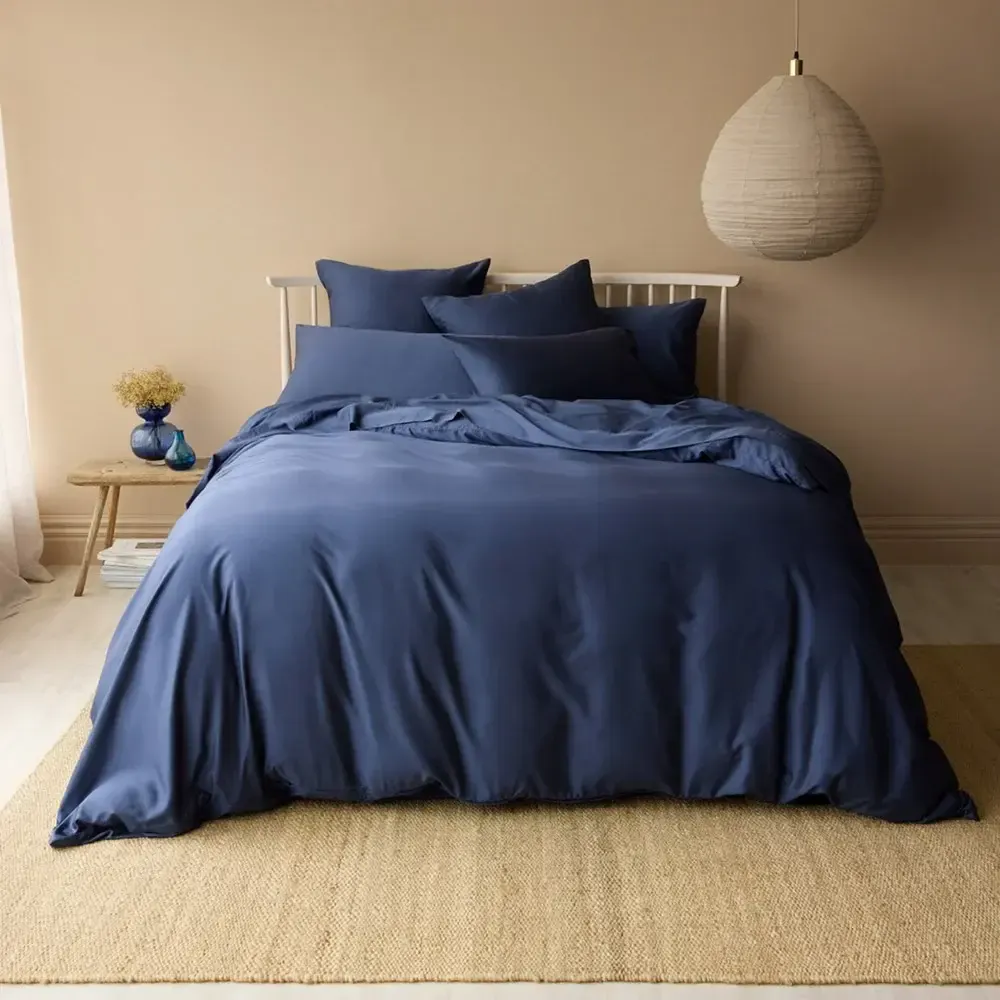
How Should You Use a Winter Duvet in an NZ Home?
Many New Zealand homes are colder and damper than those in countries with widespread central heating, so choosing the right duvet can make a noticeable difference to your comfort. A few practical rules:
- Go for higher GSM or loft for winter. A high-loft down or heavy wool duvet traps more heat, which matters in an uninsulated villa.
- Pick wool if your home is damp. Wool wicks moisture away, so you avoid that clammy feeling that down can sometimes cause in humid conditions.
- Pick feather or down if your home is dry but cold,for example, in Central Otago winters. Dry cold is where down performs best.
- Consider a dual-weight system. Many Kiwi households keep a lighter inner for summer and a heavier one for winter, or snap two together on the coldest nights for extra warmth.
What's the Difference Between GSM and Loft?
GSM and loft get used interchangeably online, but they measure different things, and only one of them measures warmth.
- Loft is the thickness or fluffiness of the duvet. Higher loft looks bigger and plusher, but loft is mostly about feel, not warmth. A high-loft duvet can look as thick as three blankets stacked together without necessarily being the warmest option in the room.
- GSM (grams per square metre) measures how dense the fill is. This is the number that correlates directly with warmth, a higher GSM duvet traps more heat regardless of how puffy it looks.
In practice: a flatter, lower-loft duvet can still be genuinely warm if its GSM is high, and a big, fluffy-looking duvet isn't automatically the warmest, if its GSM is low. . If you're choosing between two options and warmth is the priority, ask for the GSM, not just the loft.
What Size Duvet or Quilt Inner Should You Buy?
Most stores, including ours, stock duvet and quilt inners for single, king single, double, queen, king, and super king beds. The simplest rule: size up. A king inner on a queen bed gives you better drape, fewer cold-air gaps, and a fuller, hotel-style look.
A few reasons sizing up tends to pay off:
- Mattress depth. Modern mattresses run deeper than older ones, so a slightly larger duvet drapes properly instead of looking stretched.
- Cover stealing. If you or your partner tend to hog the blanket, going up a size (or using two smaller duvets) solves a lot of nighttime tension.
- The look. An oversized duvet creates that soft overflow at the sides that makes a bed look styled rather than just made.

How Do You Care for a Duvet or Quilt Inner?
Care depends entirely on fill type, so check the label before you get started. The wrong wash cycle can flatten a good duvet permanently.
General rules that apply across fill types:
- Always follow the care label, some inners are machine washable, others are dry-clean only.
- Wash at least once a year to maintain hygiene, more often if you don't use a cover, which we wouldn't recommend.
- Air the duvet in direct sunlight between washes. Sunlight helps release trapped moisture and has natural antibacterial benefits.
By fill type:
- Down & feather: dry clean only, and shake it out regularly to restore loft and shape.
- Down alternative: warm, gentle machine wash or hand wash, then line dry.
- Wool: machine wash or dry clean per the label, using a wool-specific detergent, and dry in the shade.
- Bamboo: gentle machine wash with mild detergent, dried in the shade away from direct sun.
Storage and Protection
When it's not in use, store your duvet in a sealed bag, ideally the original packaging, but leave it slightly open so air can still circulate. A duvet or quilt protector underneath your cover also extends the inner's lifespan by cutting down on dirt and general wear. And fluff it regularly: even in storage, an unfluffed duvet loses loft over time and can be slower to bounce back once it's back on the bed.
Frequently Asked Questions
Is a duvet the same as a quilt or doona?
Yes. In New Zealand and Australia, duvet, quilt, and doona all refer to the same filled bedding insert. The cover that goes around it is called a duvet cover, quilt cover, or doona cover, again, interchangeably.
What GSM should I look for in a NZ winter duvet?
There's no single number that fits every home, since insulation varies so much across NZ housing stock. As a rule, go for the higher end of whatever GSM range your retailer offers for "winter weight," and lean toward wool if your home is damp, or down if it's dry and cold.
Can you machine wash a down duvet or quilt inner?
Usually not. Most natural down and feather duvets are dry-clean only. Down alternative and synthetic fills are typically machine washable, check the label to be sure either way.
What size duvet or quilt should I buy for my bed?
Match your bed size at minimum, but sizing up one level (e.g. a king inner on a queen bed) gives better drape, fewer gaps, and a fuller look.
How often should I wash a duvet inner?
At least once a year if it's protected by a cover. Without a cover, wash more frequently, dust and skin oils build up faster than most people expect.
Bringing It Together
Whether you call it a duvet, a quilt, or a doona, the choice really comes down to fill, GSM, and your home's particular climate. Damp villa? Wool. Dry and cold? Down. Hot sleeper? Bamboo. Easy-care on a budget? A good synthetic.
If you're still torn between options, our team at George Street Linen can talk you through it in-store or by email, we deal with these exact questions most days and can help match a fill to your specific bedroom.