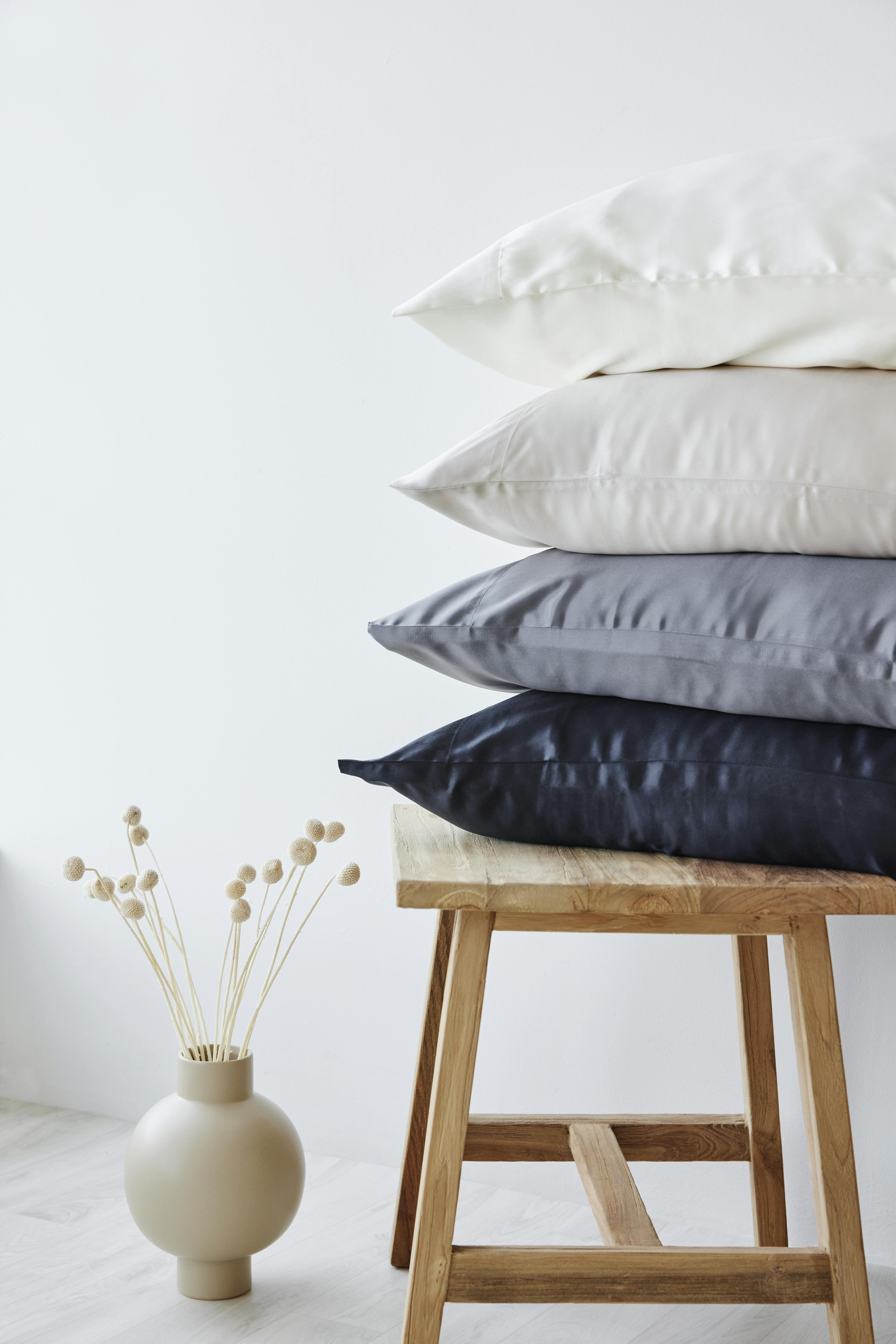
What is Mulberry Silk?
There’s a moment when you feel it - that first glide of fabric against skin. Cool, smooth, almost weightless.
That’s Mulberry silk.
Often called the “queen of textiles”, it isn’t just another type of silk. It’s the gold standard, known for its purity, strength, and unmistakable softness. The kind of material you don’t just see, but feel.
At its core, Mulberry silk is a natural protein fibre, spun by the silkworm Bombyx mori. What makes it different is how it’s produced. These silkworms are raised on a strict, single diet of fresh mulberry tree leaves, nothing mixed, nothing rushed. The result is a finer, smoother, more uniform fibre than any other type of silk.
In this guide, we’ll walk you through what Mulberry silk is, how it’s made, and why it’s become a quiet essential in bedding, sleepwear, and the rituals that happen in between.
What is Mulberry Silk Made From?
Think of Mulberry silk like you would a fine single-origin coffee or a top-shelf champagne; its exceptional quality comes from a highly controlled, carefully refined process. This is what sets it apart from “wild” silks, where silkworms feed on a variety of leaves.
What the Mulberry Silkworm (Bombyx mori) Is
The production of Mulberry silk has been refined over thousands of years, built on one quiet constant: the relationship between the domesticated Bombyx mori silkworm and its single, exclusive food source.
These silkworms are raised on a pure diet of mulberry leaves - nothing else. It’s this consistency that shapes the fibre itself, allowing them to spin cocoons made from some of the longest, finest, and most uniform silk threads in the world.
The result is a raw material that’s naturally bright, incredibly smooth, and far stronger than its softness suggests.
How Mulberry Silk Is Produced
The making of Mulberry silk is a quiet collaboration between nature and craft — one that’s been refined over thousands of years. It’s a process defined by patience, precision, and an unwavering attention to detail.
It begins not with the silkworm, but with its sole source of food: the mulberry tree (Morus alba). These trees are carefully cultivated to provide a consistent, nutrient-rich diet for the Bombyx mori silkworm. This controlled beginning is what allows the silk fibre to develop with such purity, strength, and uniformity.
After about a month of feasting, the silkworm starts to spin a protective cocoon around itself, using a single, continuous strand of liquid silk from its salivary glands.
To harvest the silk, the cocoons are placed in hot water, which softens the sticky protein binding the filament together. Skilled workers then carefully find the end of the strand and unwind the cocoon by hand. A single cocoon can produce a filament up to 1,600 metres long. This painstaking process of unwinding hair-thin strands is what truly sets mulberry silk apart, resulting in an incredibly smooth and consistent thread.
Why Mulberry Silk Is Considered the Highest Quality Silk
The feeling of mulberry silk against your skin is unmistakable. It’s that unique blend of softness, smoothness, and lightweight elegance that no other fabric can truly replicate. But this distinctive smoothness isn’t just a happy accident; it’s the direct result of the silk fibre’s unique physical properties, perfected over thousands of years.
Unlike natural fibres like cotton or wool, which are made from short staples spun together, mulberry silk is a single, continuous filament. This fundamental difference is the very source of its most famous characteristics, turning it from a simple thread into a textile masterpiece.
Key Characteristics of Mulberry Silk
- Softness: The long, unbroken threads create an almost frictionless surface that feels buttery-soft and gentle against your skin.
- Durability: Don't let its delicate feel fool you. On a fibre for fibre basis, a single strand of silk is stronger than a comparable filament of steel. This surprising durability is thanks to those long, continuous filaments.
- Smooth Texture: Its long-fibre structure eliminates the tiny, microscopic snags you find in fabrics made from shorter, spun fibres, allowing the fabric to glide effortlessly over your skin and hair.
- Natural Shine: Its unique triangular fibre structure acts like a prism, reflecting light to create a beautiful, subtle sheen that isn't overly shiny like synthetic fabrics.
It's this combination of controlled diet and breeding that results in a fibre unmatched in the textile world, making it the global standard for products like luxurious pillowcases.
The Benefits of Mulberry Silk
Sleeping on Mulberry silk might feel like a total indulgence, but it's also one of the smartest things you can do for your wellness routine. The unique properties of this natural fibre deliver real, visible benefits that help you wake up looking and feeling refreshed.
- Benefits for Skin: The ultra-smooth surface of Mulberry Silk reduces friction and sleep creases, helps retain skin moisture, and enhances the effectiveness of your night creams.
- Benefits for Hair: By minimising friction, it prevents frizz, tangles, and breakage, keeping your hair soft, smooth, and healthy.
- Hypoallergenic Properties: Mulberry Silk is naturally hypoallergenic and contains a protein called sericin that repels dust, mould, and common allergens.
- Breathability & Temperature Regulation: The fabric is breathable, moisture-wicking, cooling in summer and warm in winter, and promotes deeper, more restorative sleep.
For more detailed information, check out the article Mulberry Silk Pillowcase Benefits.