What Does Oeko-Tex Certified Mean for Your Bedding?
We sleep easy at night knowing our bed sheets are Oeko-Tex certified. Not only is our premium bedding better for you, but it's also manufactured in a way that is better for the environment.
But with so many eco-labels on the market, it can be confusing. What exactly are Oeko-Tex textiles? Which chemicals are banned? And why is this label so critical when buying linen?
Below, we break down the Oeko-Tex meaning and why it is the gold standard for your home.
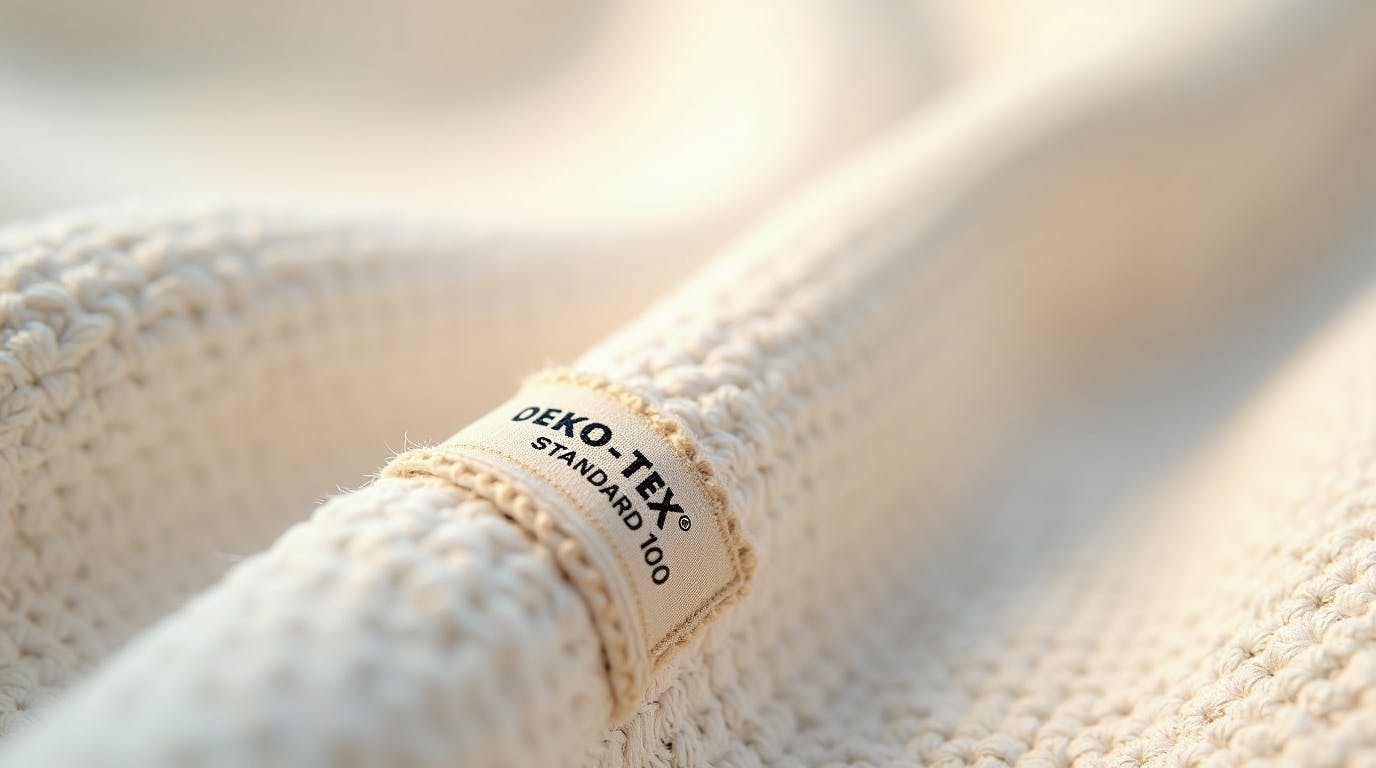
What is Oeko-Tex?
Oeko-Tex is the International Association for Research and Testing in the Field of Textile and Leather Ecology. Founded in 1992, it is a union of independent research and testing institutes.
Think of Oeko-Tex as a safety shield. Its primary mission is to test and approve textiles to ensure they are free from harmful chemicals, dyes, and bleaches. It empowers you to make responsible decisions that protect both our planet and your family’s health.
What Does "Oeko-Tex Certified" Mean?
When you see the Oeko-Tex Standard 100 label, it guarantees that every single component of the product has been tested for harmful substances and deemed safe for human health.
This is rigorous. It doesn't just mean the fabric is safe. It means:
- The threads are safe.
- The buttons and zippers are safe.
- The prints and dyes are safe.
- The linings are safe.
If a product carries the Oeko-Tex certificate, it has been manufactured without the use of toxic ingredients that often end up in cheaper, unregulated bedding.
The "Nasty" List: Oeko-Tex Certified Chemicals
Many users ask us: What exactly does Oeko-Tex test for?
To achieve certification, a textile must be entirely free from over 100 substances known to be harmful. The testing criteria are globally standardized and updated annually. The banned list includes:
- Carcinogenic colourants: Specific AZO dyes that are known to release cancer-causing amines.
- Formaldehyde: Often used in textile finishing to prevent wrinkles, but is a known respiratory irritant and carcinogen.
- Heavy Metals: Such as cadmium, nickel, and lead, which can be absorbed through the skin.
- Pesticides & Herbicides: Residues often found in cotton and flax farming.
- Pentachlorophenol (PCP): A toxic disinfectant used to prevent mold during storage/transport.
- Volatile Organic Compounds (VOCs): Chemicals that off-gas and can cause headaches or dizziness.
Independent laboratories conduct these tests to ensure impartiality, giving you a verified guarantee that you aren't sleeping on a cocktail of chemicals.