
How to Wash and Care for Silk and Satin Pillowcases
You’ve finally done it. You’ve invested in a George Street Linen Mulberry silk pillowcase. It feels like a cloud, it’s keeping your hair frizz free, and you’re waking up with fewer sleep creases.
But now, laundry day is approaching, and the anxiety is setting in.
We hear it all the time from our customers: "I’m terrified to wash it!" or "Can I just throw it in with my towels?" (Spoiler: Please don’t).
Silk is a protein fiber like your hair. You wouldn't wash your hair with harsh bleach or boil it in hot water, and you shouldn't do that to your pillowcase either. Whether you have pure Mulberry silk or high-quality satin, this guide covers every question you might have about keeping your bedding luxurious for years to come.
The Golden Rule: Read the Label First
Before we dive into the "how-to," let’s establish the most important rule of luxury bedding: The Care Label is Law.
While this guide covers general best practices for 99% of silk and satin products, specific weaves or dyes may have unique requirements. If the tag on your George Street Linen product says "Dry Clean Only," listen to it.
You can explore our Pillowcase Collection. we have Bamboo, Cotton, Belgian, silk and lots more Products that you wish.
Silk vs. Satin: Do They Wash Differently?
This is the most common question we get. Silk is a natural fiber produced by silkworms. Satin is actually a type of weave, not a fabric, though it is often made from synthetic fibers like polyester.
While they look similar, they handle water differently.
- Origin: Mulberry Silk is a natural protein fiber, whereas Synthetic Satin is a synthetic fiber.
- Water Temperature: Silk requires strictly cool water (max 30°C), while Satin can handle cool to warm water (max 40°C).
- Detergent: You must use a pH-neutral, silk-specific detergent for Silk. For Satin, regular liquid detergent is generally safe.
- Drying: Silk should be air-dried only. Satin offers more flexibility and can be air-dried or tumble-dried on low.
- Ironing: Use a cool setting or steamer for Silk; for Satin, use the synthetic setting on your iron.
If you're still unsure about the difference between silk and satin pillowcases, our complete comparison explains how they differ in feel, performance and benefits for hair and skin.
Step 1: The Pre-Wash Prep
Most damage happens before the water even hits the fabric. Friction is the enemy of silk.
- Spot Check: Look for makeup or oil stains. These need to be treated before the main wash (see the Stain Removal section below).
- Turn Inside Out: This protects the shiny outer layer (the "charmeuse" side) from rubbing against the drum or other fabrics.
- Zip It Up: If your pillowcase has a zipper, close it. Open zipper teeth act like little saws in the washing machine.
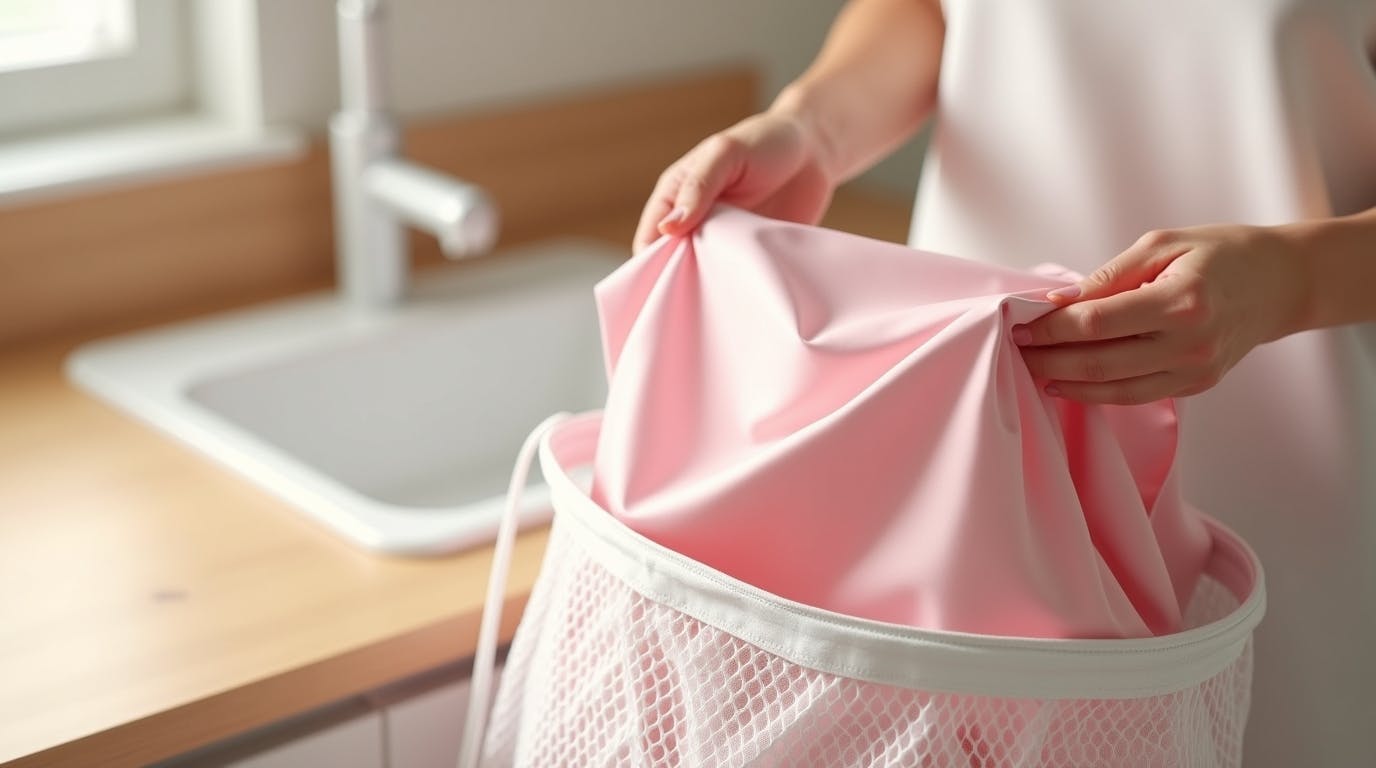
- The Magic Bag: Never wash silk loose in a machine. Place it inside a Mesh Laundry Bag. This prevents snagging and stretching.
Step 2: Choosing Your Weapon
This is where most people go wrong.
Do not use your standard supermarket powder. Standard detergents contain enzymes (proteases) designed to break down proteins (like food stains). Since silk is a protein, these detergents will literally eat away at your pillowcase over time, destroying the shine.
- YES: pH-neutral liquid detergent, specific Silk/Delicates wash.
- NO: Bleach (it turns silk yellow), Fabric Softener (it leaves a greasy residue), or "Wool Wash" (unless it explicitly says safe for silk).
Step 3: The Wash (Machine vs. Hand)
We know you’re busy. While hand washing is the "Purist" choice, modern machines can handle silk if you are careful.
Option A: The Machine Method (The Realist’s Choice)
Place your zipped, inside-out pillowcase into a mesh bag.
Set your machine to the Delicate or Hand Wash cycle.
Ensure the temperature is set to Cold (30°C or lower). Heat shrinks fibers.
Set the spin cycle to the lowest possible speed (400-600 RPM). High spins cause deep wrinkles.
Remove immediately after the cycle ends to prevent creasing.
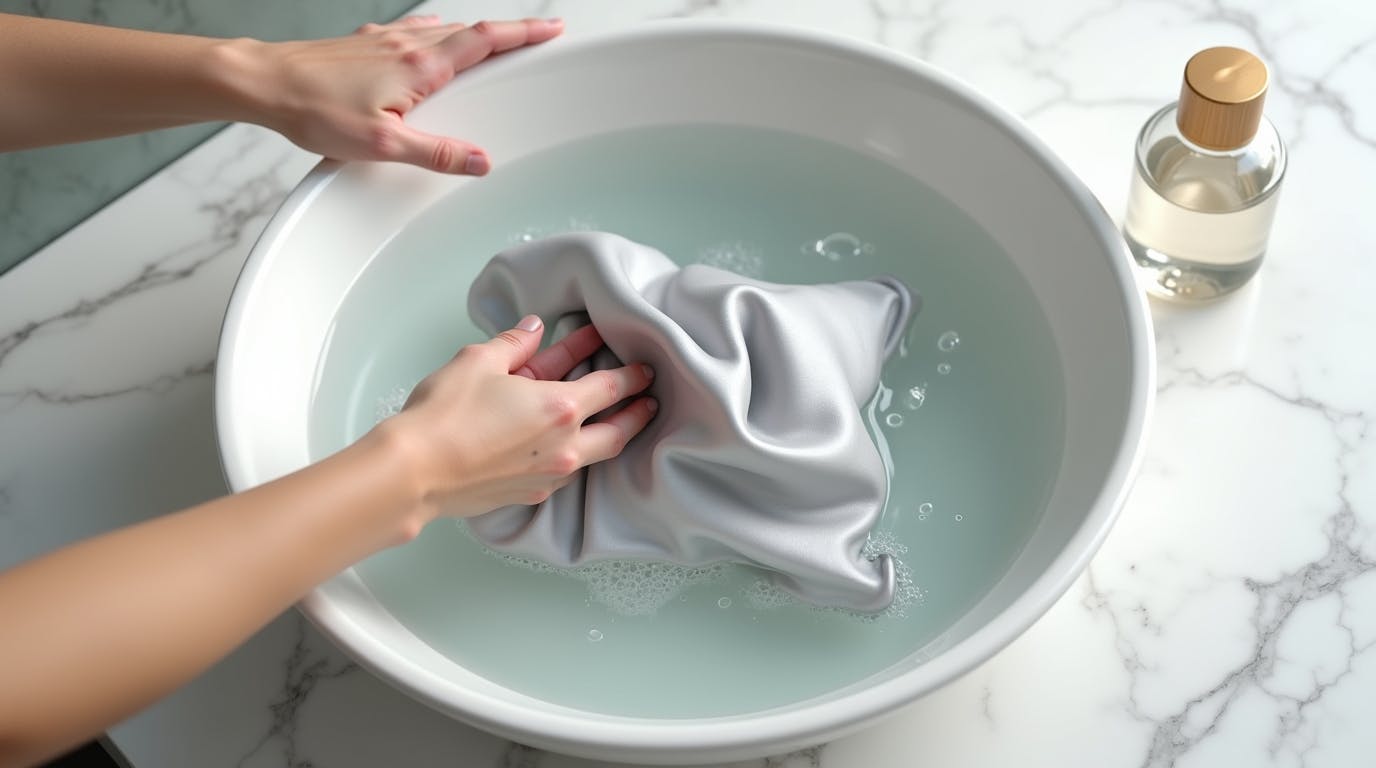
Option B: The Hand Wash (The safest method)
Fill a clean basin with lukewarm water (max 30°C).
Add a capful of silk detergent.
Submerge the pillowcase and gently swirl it. Do not scrub or rub the fabric together.
Let it soak for no more than 5 minutes. (Soaking too long can weaken the fibers).
Rinse with cool water until no soap remains.
Step 4: Drying (The Danger Zone)
NEVER put silk in the tumble dryer. Heat destroys the fibers and ruins the luxurious sheen.
The Towel Roll Method: If you hand washed, your pillowcase is dripping wet. Do not wring it out! Wringing breaks the fibers.
- Lay a clean, white cotton towel flat.
- Place the wet pillowcase flat on top of it.
- Roll the towel up like a sushi roll with the pillowcase inside.
- Gently press down on the roll. The towel absorbs the excess water.
Air Drying: Unroll the pillowcase and hang it up.
- Avoid the NZ Sun: Our UV rays are harsh. Direct sunlight will fade the color and weaken the silk within hours.
- Indoor Drying: Use a drying rack indoors, away from heaters. If it's a damp winter day, a dehumidifier in the room helps speed this up.
Step 5: Ironing and Wrinkles
Silk naturally wrinkles. It’s part of its charm. However, if you want that crisp hotel look:
- Iron while the fabric is still slightly damp.
- Use the lowest heat setting (usually labeled 'Silk').
- Always iron on the back side (the matte side).
- Pro Tip: Place a thin cotton cloth (like a tea towel) between the iron and the silk to prevent burning.
Troubleshooting: Stains & Disasters
Accidents happen. Here is how to save your bedding.
"I got makeup/foundation on it!"
Don't panic. Dab (don't rub) a little micellar water on the stain before washing. It dissolves oils gently.
"There is a blood stain!"
The golden rule for blood is COLD water. Hot water "cooks" the protein into the fabric. Rinse the spot under cold running water immediately.
"My white pillowcase is turning yellow!"
This happens due to sweat, oils, or bleach use. Try a vinegar soak: Mix equal parts cool water and distilled white vinegar. Soak for 5 minutes, then rinse thoroughly.
"My silk feels stiff after washing!"
This usually means you used too much detergent or didn't rinse enough. Run it through a rinse-only cycle with a tablespoon of distilled white vinegar in the fabric softener compartment to strip the residue.
Ready for a fresh set? It’s always good to have a spare while one is drying.
For stains on other pillowcase fabrics, see our complete guide to washing and whitening pillowcases. For silk, always follow the gentler methods outlined above.
Frequently Asked Questions
How often should I wash my silk pillowcase?
Since silk touches your face for 8 hours a night, we recommend washing it every 7-10 days to keep your skin clear and the fibers fresh.
Can I use essential oils in the wash?
We advise against it. Oils can leave "grease spots" on silk that are very hard to remove.
Does the "Momme" count change how I wash it?
Higher momme (like our 22 or 25 momme) contains more silk per inch, making it more durable and able to withstand machine washing better than cheaper, thin silk. However, the care instructions remain the same.