Pillowcase Types: The Ultimate Guide to Styles, Shapes
We spend a third of our lives resting our heads on them, yet most of us are still guessing when it comes to buying them.
If you have ever stood in a linen aisle wondering what the difference is between a "Housewife" and an "Oxford" pillowcase, or why you might need a "Euro" sham, you are not alone. The world of bedlinen is full of terminology that can make a simple update to your bedroom feel like a complex puzzle.
But getting it right matters. The type of pillowcase you choose doesn't just change the look of your bed it changes the way you sleep. From the construction of the border to the mechanics of the closure, every detail serves a purpose.
In this guide, we are decoding the dictionary of bedding. Whether you are looking for the clean lines of a minimalist bedroom or the layered luxury of a hotel suite, here is everything you need to know to choose the perfect pillowcase.
shop our pillowcase collection
The "Big Two" Construction Styles (Housewife vs. Oxford)
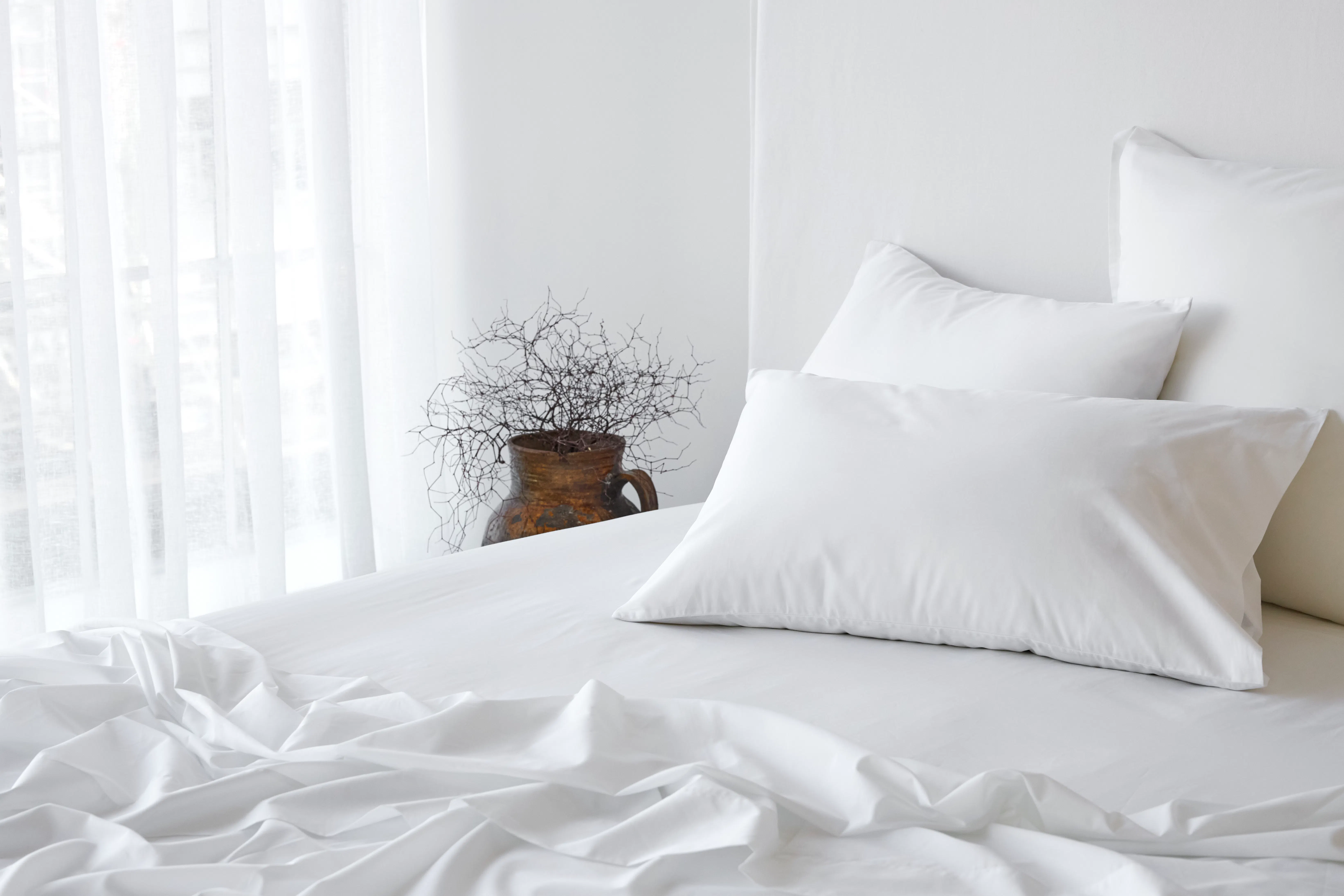
When you are shopping for bedlinen, you will almost always face a choice between "Housewife" and "Oxford" pillowcases.
A common misconception is that these names refer to different sizes. They do not.
Both a standard Housewife and a standard Oxford pillowcase are designed to fit the exact same pillow insert (usually 50 x 75cm). The difference lies entirely in the construction of the edge and the decorative border.
1. The Housewife Pillowcase
The Housewife pillowcase is the most common and functional style available. It features a sewn edge that fits perfectly around the pillow, with no decorative border or extra fabric extending beyond the seam.
- The Look: Clean, simple, and tidy. It creates a minimalist aesthetic where the pillowcase contours strictly to the shape of the pillow.
- The Construction: It typically uses an envelope closure (a flap of fabric inside) to prevent the pillow from falling out.
- History Note: The term doesn’t refer to a person, but to the "Housewives Cooperative" in Bolton, UK, who adapted this efficient, fabric-saving design in the 19th century.
2. The Oxford Pillowcase
The Oxford pillowcase is strictly decorative in its construction. It has the same internal dimensions as the Housewife, but it features a fabric border, known as a flange, usually ranging from 5cm to 10cm wide, extending from all four sides.
- The Look: Substantial and luxurious. The flange makes the pillow appear larger and grander on the bed. When propped up against a headboard, the border "slumps" slightly, adding a relaxed, textural drape that looks particularly stunning in washed linen.
- The Construction: The pillow sits inside the central pocket, and the decorative hem frames it.
- Best Used For: The rear pillows in a stack. Because they look larger, they frame the smaller Housewife pillows in front perfectly.
3. The Bag Style Pillowcase
Less common in luxury retail but frequently seen in hotels, the Bag Style is exactly what it sounds like. The opening is usually at the side with no internal flap (envelope) to hold the pillow in.
- The Look: Very basic. The end of the pillow may be visible if the case is not long enough.
- The Construction: Often features a "hemming" fold rather than a secure closure.
Comparing the Styles: Which is Right for You?
While the dimensions of the internal pillow pocket may be the same, the visual impact and practical function of these three styles differ significantly.
1. The Housewife Style (Minimalist & Practical) Visually, the Housewife pillowcase offers a minimalist and tidy profile. It features a clean sewn edge (often called a "knife edge") that contours perfectly to the pillow. Because it is true to size, it is the most practical choice for your primary sleeping pillows—the ones that sit at the front of your bed stack.
- Primary Benefit: It is low maintenance. With less excess fabric at the edges, it requires less ironing to look sharp.
- Trade-off: If used alone on a large bed without other layers, it can look a bit "flat" or utilitarian.
2. The Oxford Style (Luxurious & Decorative) The Oxford style is defined by its luxurious and decorative profile. The distinguishing feature is the 5cm+ fabric border (flange) that surrounds the pillow, making the entire pillow appear 10-15% larger than it actually is. This makes it ideal for the back of your pillow stack or for reading pillows, as it adds height, volume, and drama to the bed arrangement.
- Primary Benefit: It instantly elevates the look of the bed, filling gaps and adding a "designer" touch.
- Trade-off: The flange can become floppy or wrinkled if not ironed or starched, requiring a bit more care to keep it looking crisp.
3. The Bag Style (Utilitarian & Basic) Commonly found in hospitality or budget ranges, the Bag style has a utilitarian and basic profile. It features a simple open hemmed edge without the internal flap found in Housewife or Oxford cases.
- Primary Benefit: Speed. It is incredibly easy to put on and take off rapidly, which is why it is often used for guest beds or high-turnover rentals.
- Trade-off: Without a secure closure, the pillow often slips out during the night, and the white pillow insert can be visible at the open end.
Using the right pillowcase is important; the article Silk vs. Satin Pillowcases for Skin and Hair helps you understand all the differences between silk and satin and make the best choice.
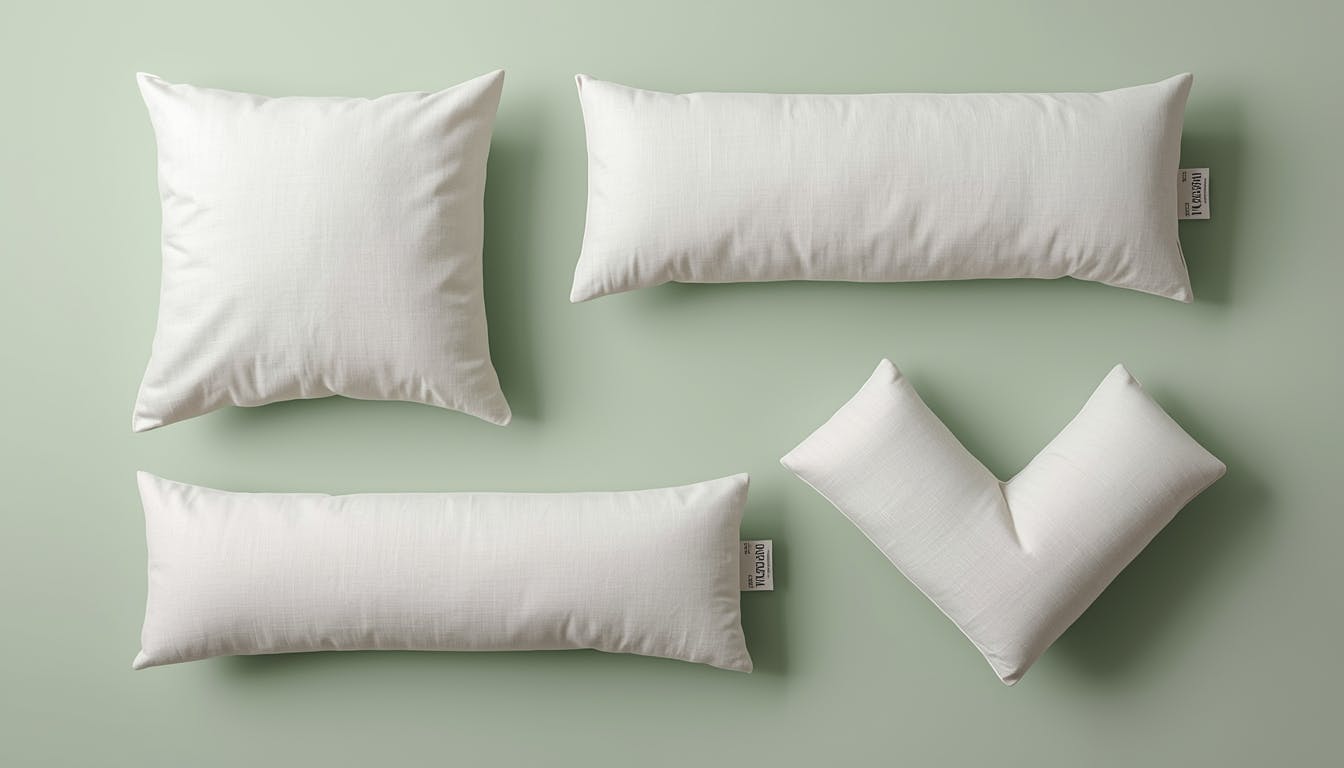
The Shape Dictionary
While the standard rectangular pillow is the foundation of any bed, a truly "styled" look often relies on mixing different shapes and sizes. These specialty pillowcases serve specific functional and aesthetic roles.
Here is the definitive glossary of pillowcase shapes you will encounter.
1. The Euro (Continental) Pillowcase
The Euro (short for European) is a large square pillowcase, typically measuring 65cm x 65cm.
- The Shape: Perfectly square.
- The Function: These are the "workhorses" of a styled bed. They sit against the headboard, behind your standard sleeping pillows. Because of their height, they provide excellent back support for reading or drinking coffee in bed.
- Styling Tip: For a Queen bed, use two Euros. For a King or Super King, use three to span the full width of the headboard without gaps.
Explore our Euro Pillowcase collection. We offer these products in a range of premium fabrics, including Bamboo Cotton, Liberty Fabric, Fresh Cotton Percale, and Pure Linen.
2. The Lodge (King) Pillowcase
A Lodge pillowcase is essentially a standard rectangular pillow that has been stretched. While a Standard case is ~75cm long, a Lodge case is typically 90cm long.
- The Shape: Elongated rectangle.
- The Function: Designed for King and Super King beds. Two standard pillows often look "lost" on a massive Super King mattress, leaving a gap in the middle. Two Lodge pillows fill the width perfectly.
- Also Known As: King Pillowcase (US/Global), Lodge Pillowcase (NZ/Aus).
3. The Bolster (Neckroll) Pillowcase
The Bolster is a tube-shaped pillowcase, circular at the ends and long in the body.
- The Shape: Cylindrical or "Tootsie Roll" shape.
- The Function: primarily decorative, acting as the "jewellry" of the bed arrangement. However, they provide excellent support under the knees (to relieve lower back pain) or under the neck.
- Construction Note: These often feature unique closures, such as drawstrings or fitted circular end-caps, rather than a simple envelope opening.
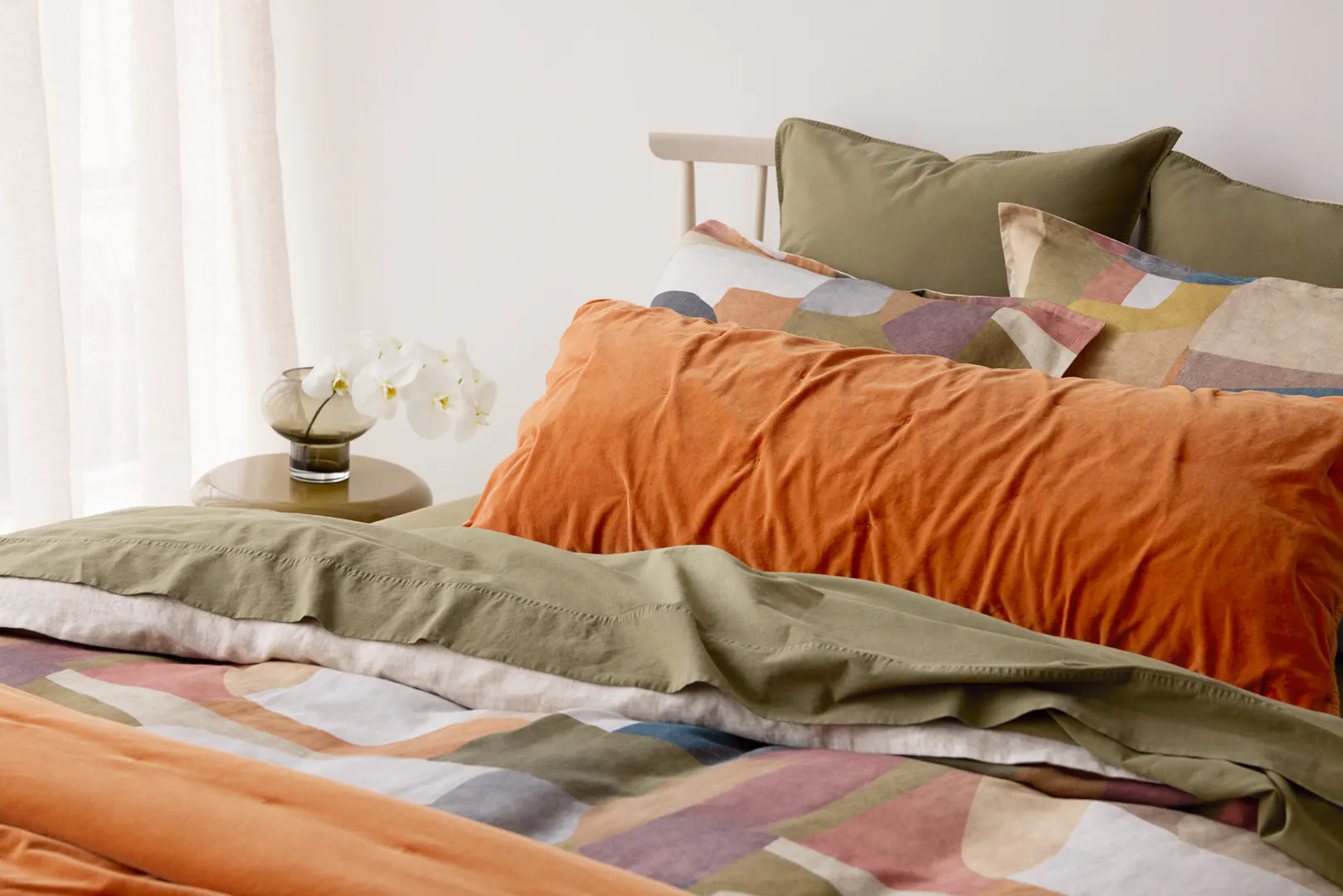
4. The V-Shape (Tri-Pillow) Case
As the name implies, this case is cut into a "V" or distinct chevron shape ("boomerang" shape).
- The Shape: V-shaped.
- The Function: This is a functional orthopedic shape. It is widely used for nursing mothers, people who need upright elevation while sleeping, or for reading support.
- The Fit: Because of the complex angle, these must be bought specifically as "V-Shape" cases; a standard case cannot be forced to fit.
5. The Body Pillowcase
These are exceptionally long pillowcases, often matching the width of the mattress itself (roughly 150cm long).
- The Shape: Very long, narrow rectangle.
- The Function: Designed to be hugged. Side sleepers and pregnant women use these to align the hips and spine during sleep.
The Mechanics of Closure
A beautiful pillowcase is useless if the pillow slides out of it halfway through the night. The "Closure Type" refers to the method used to secure the pillow insert inside the fabric.
While this may seem like a minor detail, it significantly impacts the comfort and longevity of your bedding.
1. The Envelope Closure (The Standard)
This is the industry standard for high-quality linen. Instead of using hard hardware like zips or buttons, the fabric at the open end folds back inside the case, creating an internal pocket or "flap."
- How it Works: You slide the pillow in, then tuck the end of the pillow under the internal fabric flap. The weight of the pillow keeps the flap closed.
- The Benefit: There are no hard bits to scratch your face or get caught in your hair. It is durable because there are no mechanical parts to break in the wash.
- Common In: Housewife and Oxford styles.
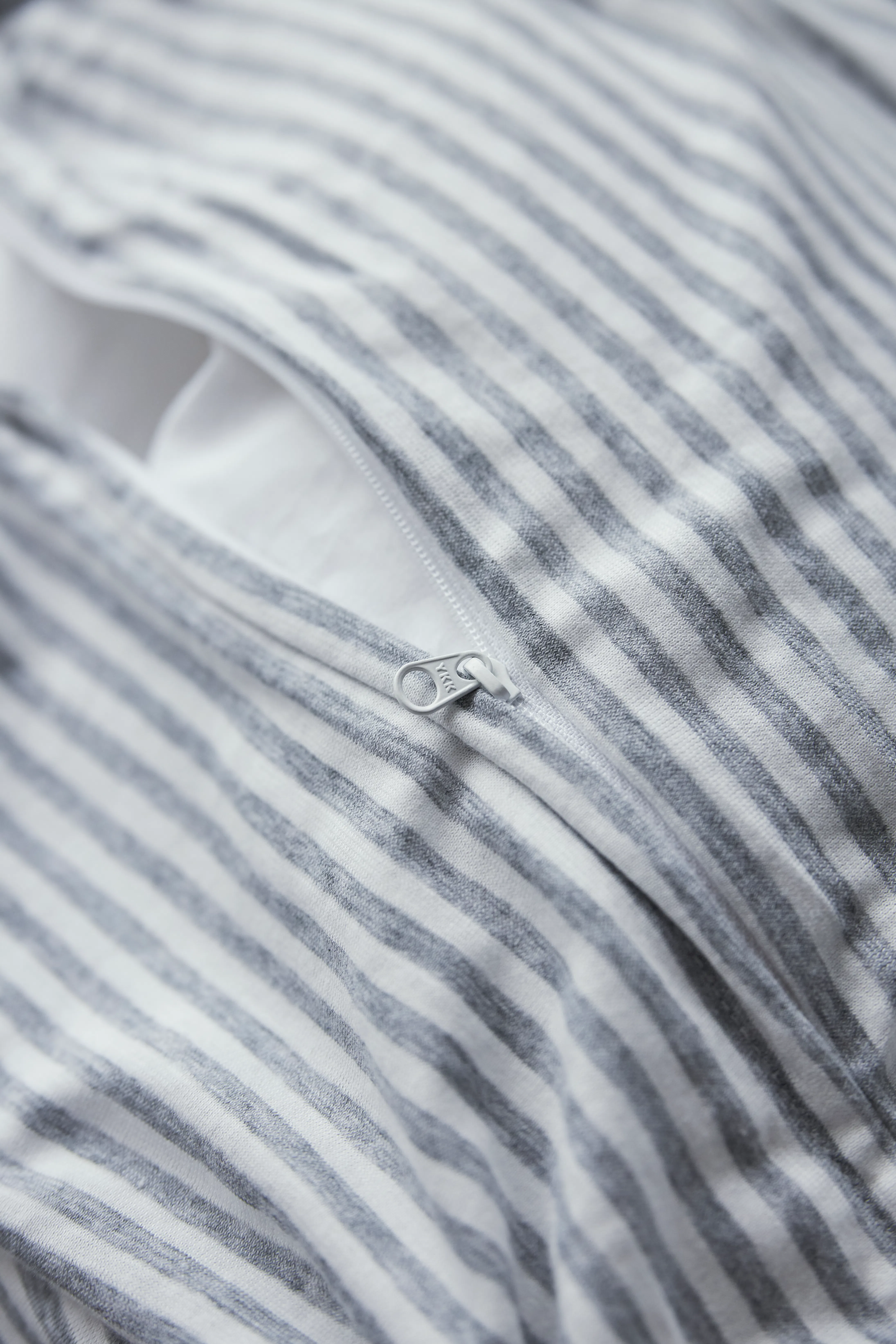
2. The Zipper Closure
Zippered cases are growing in popularity, particularly for silk pillowcases or those designed for allergen protection.
- How it works:
A zipper runs along the edge (usually the short side), sealing the pillow completely. High-quality designs use a hidden zipper, where the fabric folds over the teeth so you don’t feel a thing. - The benefit:
Your pillow stays exactly where it should - no slipping, no bunching. It also creates a more secure barrier against dust and allergens. - Designed with details in mind:
Our pillowcases (and duvet covers) are finished with premium YKK zippers - smooth, reliable, and made to last, keeping everything neatly in place while making bed changes effortless.
Like anything well-used, zippers can wear over time, especially lower-quality ones. That’s why we choose components designed to go the distance. And if something does need attention, we offer repairs where possible, simply get in touch and we’ll help you sort it.
3. Tie & Button Closures
These are often found on "Shabby Chic," vintage-style, or rustic linen bedding.
- How it Works: Instead of tucking away, the open end is secured by tying two fabric ribbons together or buttoning the edge shut.
- The Benefit: It adds a visible textural element to the bed. It evokes a relaxed, romantic, or farmhouse aesthetic.
- The Downside: Buttons can fall off in the washing machine. Ties can become knotted or untied during sleep. These are generally better for decorative pillows (Shams) rather than the main pillow you sleep on.
Fabric Weave Types
The final "type" you need to understand isn't about the shape or the border - it is about the texture.
A common mistake is assuming that "Cotton" describes the feel of the pillowcase. It does not. Cotton is just the ingredient. The recipe (the weave) determines whether that cotton feels like a crisp dress shirt or a silky ribbon.
Choosing the best fabric for pillowcases depends on how you sleep, the texture you prefer, and how much breathability you need.
1. The Percale Weave
If you love the feeling of hotel sheets that feel cool to the touch and have a matte finish, you are looking for Percale.
- The Construction: This uses a "one-over, one-under" weave structure. It is a tight, grid-like weave.
- The Feel: Crisp, lightweight, and breathable. It has no sheen (shine).
- Best For: "Hot sleepers" or summer months. The structure allows air to pass through easily, preventing heat trapping.
2. The Sateen Weave
Do not confuse "Sateen" with "Satin" (which is synthetic). Cotton Sateen is 100% natural cotton woven differently.
- The Construction: This uses a "three-over, one-under" structure. By floating more threads over the surface, less of the thread is tucked away.
- The Feel: Buttery soft, slightly heavier, and warmer than percale. It has a subtle luminous sheen (glow).
- Best For: "Cold sleepers" or those who prefer a luxurious, draped look rather than a crisp look.
3. The Linen Weave
Linen is not a cotton weave; it is a completely different fiber from the flax plant.
- The Construction: Linen fibers are thicker and hollow. The weave is looser and more textured than cotton.
- The Feel: It has a distinct "slub" (natural texture) and substantial weight. It feels cool in summer and warm in winter due to its hollow fibers.
- Best For: Longevity. Unlike cotton, which wears out, linen wears in, becoming softer with every wash.
4. Silk (and Momme Types)
Silk pillowcases are classified by weight, not thread count. The unit of measurement is Momme (mm).
- 19 Momme: The entry-level standard. Lightweight.
- 22 Momme: The luxury standard. More durable and smoother.
- 25+ Momme: The ultra-premium heavy weight.
- Best For: Skin and hair care. The friction-free surface prevents "sleep lines" on the face and reduces frizz for curly hair.
Now you can choose the perfect pillowcase for you. Our collection includes a variety of silk and satin pillowcases that help protect your hair and skin while you sleep. View Pillowcase Products
Building Your Perfect Bed
Understanding pillowcase types is the secret to building a bed that looks like it belongs in a magazine but functions for your real life.
- Start with the Foundation: Choose your Weave (Percale for cool, Sateen for smooth, Linen for texture).
- Select your Size: Use Standard or Lodge for sleeping, and Euros for reading support.
- Define the Style: Use Housewife cases for the pillows you sleep on, and Oxford cases for the pillows that frame the bed.
By mixing and matching these types, you don't just get a place to sleep - you get a curated sleep experience.
Frequently Asked Questions
1. Can I use Oxford and Housewife pillowcases on the same bed?
Yes, in fact, we recommend it for a "designer" look. The best approach is to layer them. Place your Oxford pillowcases (with the decorative border) at the back against the headboard to add volume and height. Then, place your Housewife pillowcases (with the clean edge) in front for sleeping. This gives you the aesthetic elegance of the Oxford border without it tickling your face while you sleep.
2. Will a standard pillowcase fit a King-sized pillow?
No, a standard pillowcase (approx. 74cm long) is too short for a true King-sized pillow insert. If you force a King pillow into a standard case, it will feel hard and compressed, and the end will stick out. For King pillows, you must look for the Lodge (or King) pillowcase type, which is specifically designed at ~90cm length to allow the fill to loft correctly.
3. Which fabric weave type is best if I get hot at night?
If you are a "hot sleeper," you should look for a Percale or Linen type. Percale features a "one-over, one-under" grid weave that is inherently breathable and allows heat to escape. Avoid Sateen or high-thread-count blends, as their tighter structure can trap body heat against the skin.