The Ultimate Pillowcase Buying Guide 2026
You spend roughly 2,920 hours a year with your face pressed against a pillow. Yet, for most of us, the pillowcase is an afterthought, something we grab off the shelf because the colour matches the duvet.
But if you’ve woken up with "sleep creases" etched into your cheek, tangled "bird's nest" hair, or unexplained breakouts, you already know the truth: Your pillowcase is a beauty tool.
Right now, the internet is flooded with ads for "miracle" pillowcases. Brands like Blissy dominate your social media feeds, promising to erase wrinkles and cure frizz overnight with 100% Mulberry Silk. But with a price tag often exceeding $100 NZD per case, the question is valid: Is it actually worth it?
Discover our complete pillowcase collection made from Oeko-Tex® certified fabrics, carefully selected for comfort, durability, and skin safety.
Why We Wrote This Guide
We don’t just make bedding; we pay close attention to the fabric. With years of textile experience behind it - and our founder who knows cloth intimately - quality is never about the price tag. It comes down to the weave, the weight, and what sits quietly against your skin.
Not all bedding is made the same. And it’s not always obvious why. Here’s what actually matters, and what to pay attention to:
- Compare the giants: A transparent review of Blissy (Silk) vs. George Street Linen (Bamboo & Linen).
- Demystify the jargon: What does "22-Momme" actually mean? Is "Bamboo Sateen" better than Silk?
- Test the claims: Which fabric actually prevents hair breakage, and which is just slippery plastic in disguise?
- What matters is simple: What you sleep on should be safe, considered, and made to last. That’s why every product we mention, including our own, meets the Oeko-Tex® Standard 100.
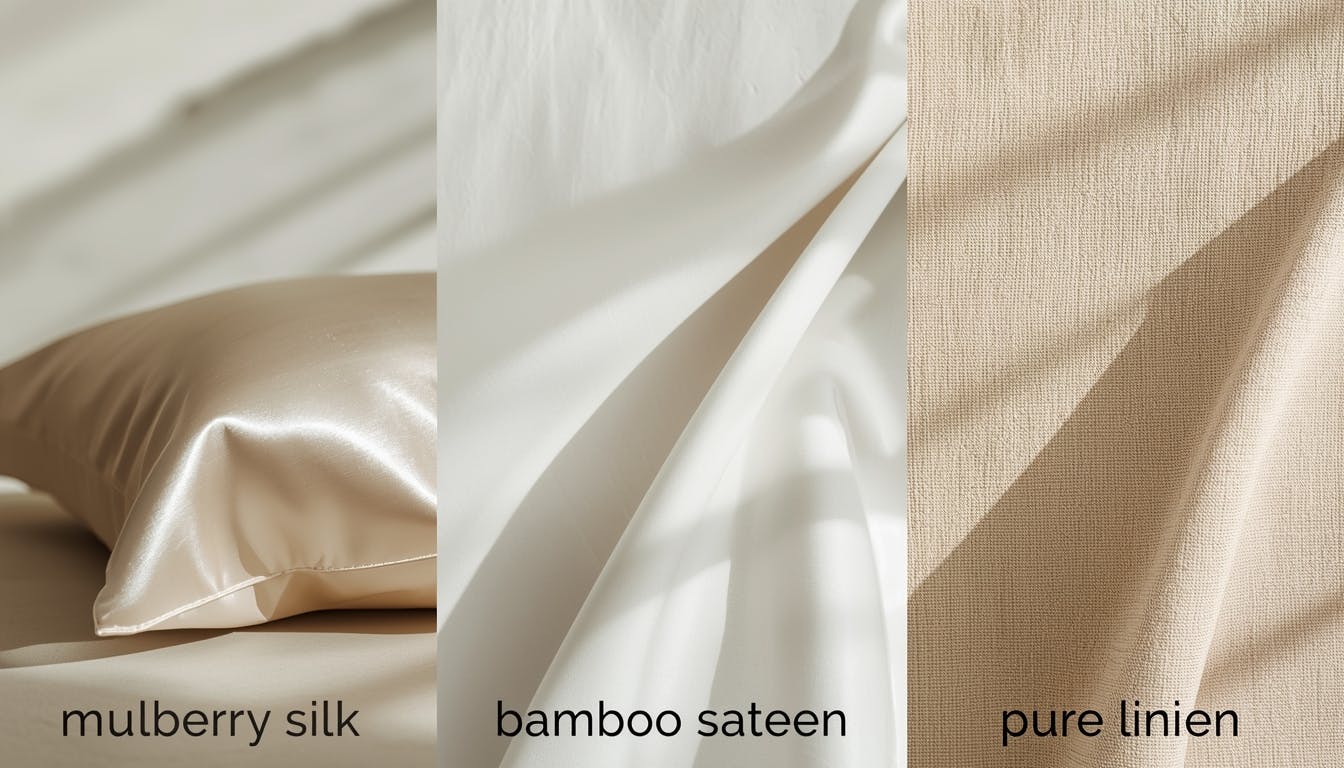
Material Matters, Silk vs. Bamboo vs. Linen
Before you swipe your credit card for a $100 pillowcase, you need to understand what you are actually paying for. The biggest marketing trick in the bedding industry is confusing the customer with buzzwords like "Momme," "Thread Count," and "Sateen."
Let’s break down the technical specs so you can compare these fabrics side by side.
The Metrics: Thread Count vs. Momme
You will often see Silk brands (like Blissy) talking about "Momme" and Cotton/Bamboo brands talking about "Thread Count." They are not the same thing.
- Thread Count (TC): This counts the number of threads in one square inch of fabric.
The Myth: "Higher is always better."
The Reality: Anything over 500 TC is often a marketing gimmick using thinner, weaker threads twisted together. A crisp 300-400 TC is usually the sweet spot for durability and breathability.
- Momme (mm): This measures the weight of silk.
The Standard: 19-momme is entry-level. 22-momme (what Blissy uses) is the gold standard for bedding thick enough to be durable, but soft enough to be luxurious.
The 4 Main Contenders: Which Fabric Wins?
We have tested the four most popular pillowcase materials against each other in our NZ workshop. Here is the breakdown:
Mulberry Silk (e.g. Blissy)
Silk is a protein fibre produced by silkworms. It is undeniably the smoothest surface you can sleep on.
- Best For: Anti-aging, preventing hair breakage, and keeping expensive face creams on your skin (not the pillow).
- The Feel: Ultra-smooth, slippery, and cool to the touch.
- Maintenance: High. Silk is fragile. It snags on fingernails or rough skin and usually requires hand-washing or delicate cycles. It hates sunlight.
- Price: High ($90 - $150+ NZD).
Upgrade your sleep with 100% pure Mulberry Silk pillowcases. Smooth, breathable, and gentle on skin and hair, they help reduce frizz and maintain hydration while adding a touch of elegance to your bed.
Bamboo Sateen
If you want the benefits of silk but dislike the idea of hand-washing your bedding, Bamboo is the answer. When woven in a "Sateen" structure (four threads over, one under), it mimics the slippery feel of silk.
- Best For: Sensitive skin (it is naturally antibacterial/hypoallergenic) and people who want luxury without the hassle.
- The Feel: Buttery soft with a slight "grip" so you don't slide off the pillow, but smooth enough to prevent frizz.
- Maintenance: Easy: It is durable and machine washable.
- Price: Medium ($40 - $60 NZD).
- Verdict: The "Smart Alternative." You get 90% of the silk beauty benefits for 50% of the price.
Pure Linen
Linen is made from the flax plant. It is not designed to be "slippery" like silk; it is designed to breathe.
- Best For: Hot sleepers and night sweats. Linen can hold 20% of its weight in moisture without feeling damp.
- The Feel: Textured and organic. It feels crisp at first but gets softer with every single wash.
- Maintenance: Very Easy. Linen is incredibly strong (stronger than cotton) and lasts for decades.
- Price: Medium-High ($50 - $80 NZD).
Cotton Percale
The classic "hotel crisp" feel.
- Best For: People who love a cool, crisp side of the pillow.
- The Feel: Matte finish, crisp, and clean. It does not have the "slip" of silk or bamboo.
- Maintenance: Easy machine wash.
- Price: Low-Medium ($20 - $40 NZD).
Expert Tip: If your main concern is beauty (hair/skin) but your budget is tight, skip the cheap polyester satin (which causes sweating) and opt for Bamboo Sateen. It breathes better than synthetic satin and is smoother than cotton.
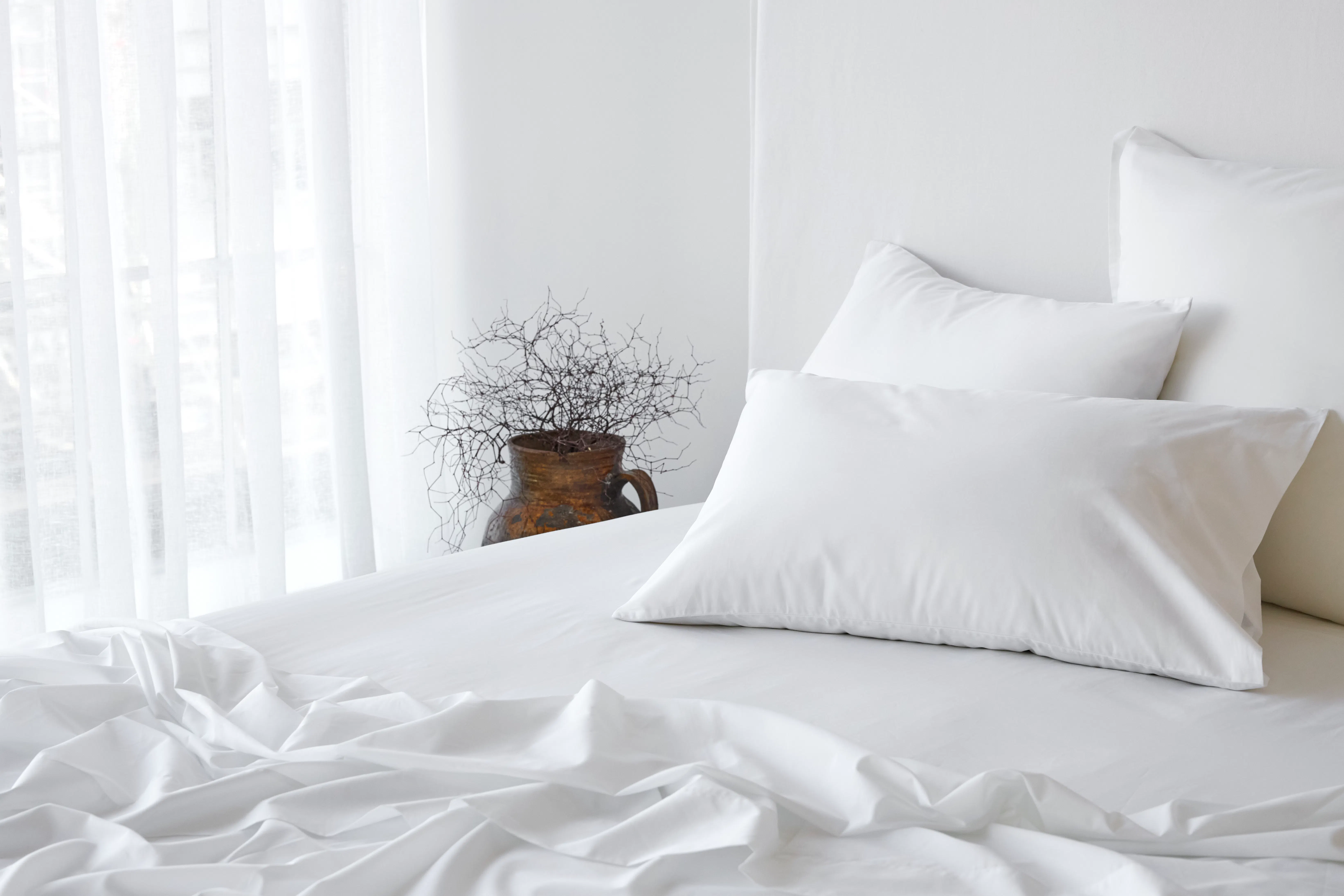
The 2026 Buying & Care Guide
Choosing the right material is only half the battle. To get the best sleep (and the best value), you need to get the size and care right. Here is our expert checklist.
Sizing: Don't Buy the Wrong Fit
One of the most common mistakes we see is customers buying "King" pillowcases for "Standard" pillows. Sizing varies globally, but here is the rule of thumb for New Zealand and Australia:
- Standard Pillowcase (48cm x 74cm): This is the universal size for 90% of sleeping pillows. If you buy a bed set, this is what comes with it.
- King / Lodge Pillowcase (50cm x 90cm): These are significantly longer. They are designed for "King" pillows used on Super King beds to fill the width of the mattress.
- Euro Pillowcase (65cm x 65cm): These are the large square pillows used for decoration or reading in bed.
Our recommendation: We love using contrasting colours for Euros to style the bed, but we recommend sleeping on a Standard rectangular pillow for better neck support.
Tip: Do not put a Standard pillow in a King case the excess fabric will bunch up and create uncomfortable creases under your face.
Quality Check: How to Spot a Lemon
Before you keep a new pillowcase, check these three things:
- The Smell Test: Does it smell like strong chemicals? If yes, it likely hasn't been washed or treated properly during manufacturing. (Our Oeko-Tex certification guarantees no harmful fumes).
- The Stitching: Turn it inside out. Are the seams raw and fraying, or are they neatly finished (French seams or overlocked)? Loose threads inside will tangle in the wash and destroy the case.
- The "See-Through" Test: Hold it up to a window. If you can see your hand clearly through the fabric (especially with cotton or cheap silk), the thread count is too low, and it will wear out quickly.
Care Guide: Making It Last
A premium pillowcase should last for years, not months. Here is how to keep them pristine.
The Golden Rules for Washing:
- Bamboo & Silk: These are delicate. Always wash in cool or lukewarm water (30°C). Hot water cooks the fibres, causing shrinkage and loss of shine. Use a gentle, liquid detergent.
- Linen: Loves water! It actually gets softer the more you wash it. You can wash linen on a normal cycle, but avoid extreme heat.
Drying:
- Never tumble dry Silk, it will fry the fibres.
- Bamboo & Linen: Line drying in the shade is best. If you must use a dryer, use the low heat/delicate setting and take them out while slightly damp to minimise wrinkles.
Troubleshooting:
- "Why is my pillowcase turning yellow?"
- This is caused by sweat and body oils oxidising on the fabric.
- The Fix: Do not use bleach (it weakens fibres). Instead, soak the pillowcase in a mixture of cool water and white vinegar or baking soda before washing. Sunlight is also a natural whitener for linen.
- "How do I prevent wrinkles?"
- Remove the pillowcase from the washing machine immediately after the cycle ends. Shake it out vigorously before hanging. If you love a crisp look, iron your Linen or Bamboo while it is still slightly damp.
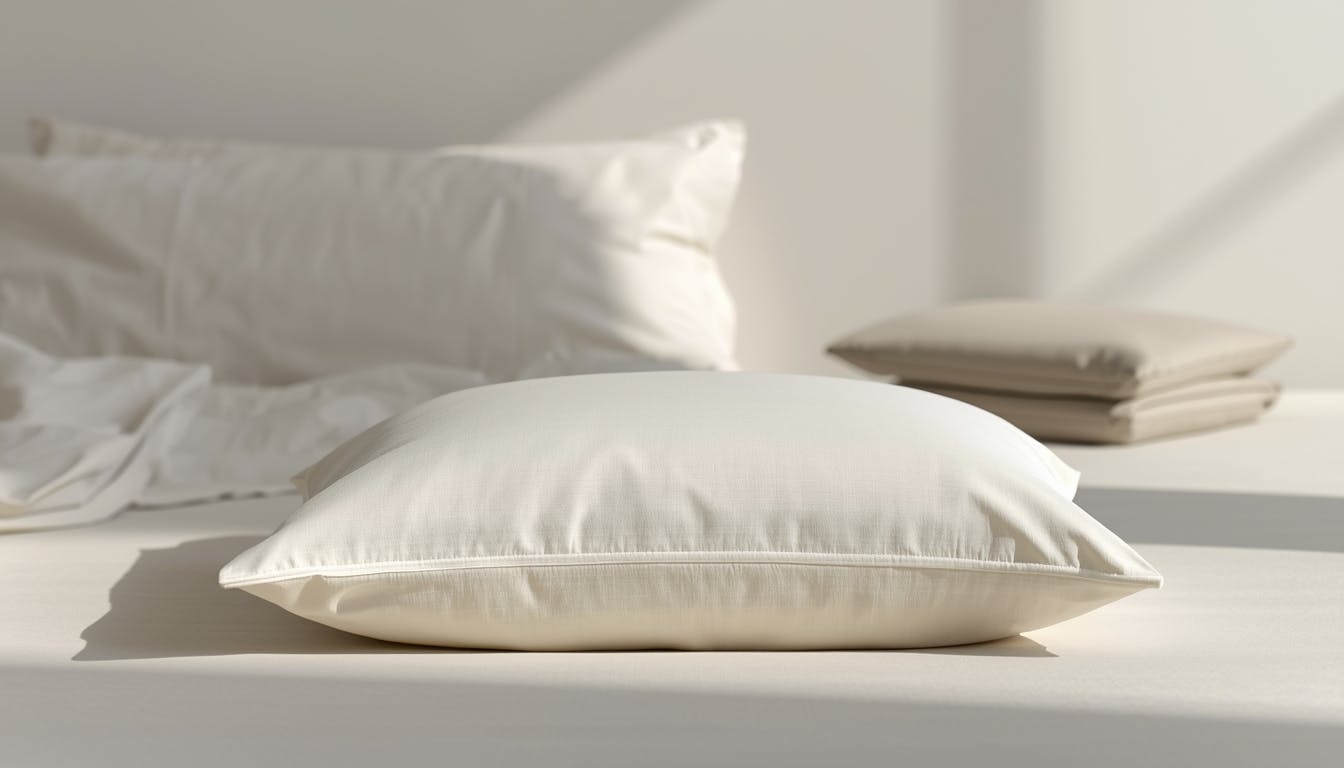
The Verdict
We have covered a lot of ground - from molecular structures of silk to the mechanics of zippers. So, what is the bottom line? Which pillowcase deserves a spot on your bed?
The "Quick Pick" Summary
Based on our testing and customer feedback, here is our final recommendation:
- Best Overall Value & Comfort: Bamboo Sateen.
- Why: It offers 90% of the beauty benefits of silk (smoothness, anti-frizz) but is machine washable, durable, and half the price. It’s the practical choice for everyday luxury.
- Best for Hot Sleepers: George Street Linen Pure Linen.
- Why: Unbeatable breathability. If you wake up sweating, this is the only fabric that actively manages moisture.
- Best for Severe Hair Damage: Mulberry Silk
- Why: If money is no object and your primary concern is repairing bleached or brittle hair, the extreme slip of 22-Momme silk is the gold standard. Just be prepared for the delicate care routine.
- Best Budget Buy: Cotton Percale.
- Why: Crisp, clean, and classic. It won’t help with wrinkles, but it will last a lifetime.