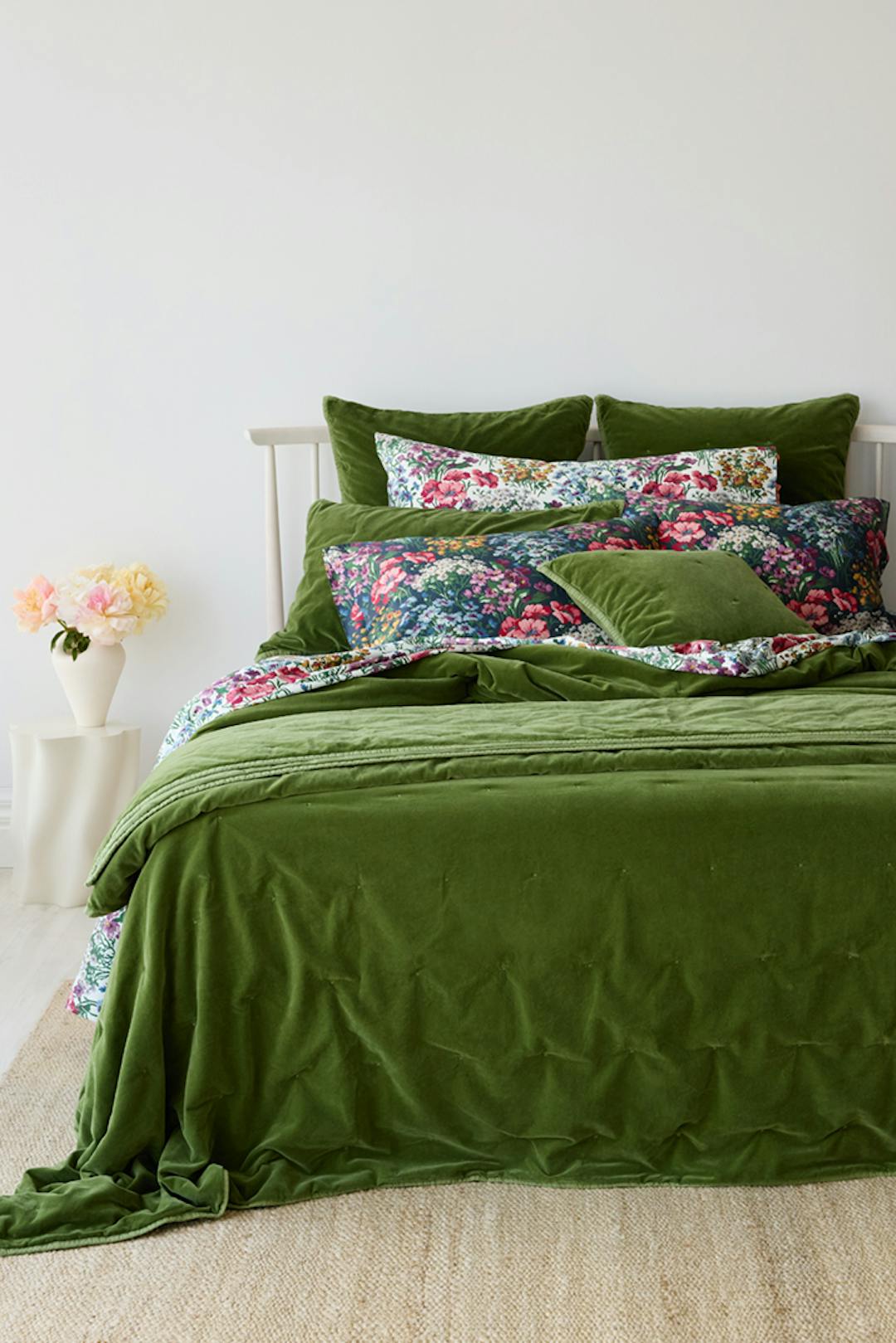
What is a Coverlet? The Ultimate Guide to Purpose, Style, and Uses
If you have ever stood in a bedding aisle or scrolled through an online store feeling confused by the terminology, you are not alone. Duvets, doonas, quilts, comforters, bedspreads, and coverlets what is the actual difference?
In New Zealand, where our weather can shift four times in a single day, the coverlet is perhaps the most underrated and versatile piece of bedding you can own. But what exactly is it, and do you need one?
This guide breaks down everything you need to know about coverlets, from materials and sizing to styling your bed like a pro.
The Definition: What Exactly is a Coverlet?
In its simplest form, a coverlet is a lightweight, non-reversible bedspread.
Unlike a duvet (which requires a cover and has a high "loft" or fluffiness), a coverlet is thin and usually quilted or woven. It is designed to be a decorative layer that sits on top of your bed, but it also serves a functional purpose.
The Anatomy of a Coverlet
- The Weave: High-quality coverlets often feature textured weaves like Matelassé (a stitching technique that mimics a quilt) or Waffle (honeycomb texture).
- The Fill: Most coverlets have very little to no filling (batting). If they do, it is a thin layer of cotton or polyester batting sandwiched between two pieces of fabric to create warmth without bulk.
The Size: They are designed to hang over the sides of the bed but usually do not touch the floor like a traditional "bedspread" would.
The Great Debate: Coverlet vs. Quilt vs. Duvet
This is the most common question we get asked. Here is the definitive breakdown to help you decide what you need.
Coverlet
Coverlets are defined by their thin, lightweight, and low-profile structure. They usually contain minimal or no filling, relying instead on a woven texture. This makes them the ideal choice for sleeping in the summer or serving as a decorative, extra layer during the winter. Visually, they offer a neat, tailored look, and because they are a single piece, they are very easy to machine wash.
Bring the serenity of nature into your bedroom with our premium Natural Coverlets.
Duvet (Doona)
On the other end of the spectrum, a Duvet (also known as a Doona) is thick, fluffy, and high-loft. Filled with materials like down, wool, or synthetic fiber, it serves as the main source of warmth during cold winters. It creates a plush, cloud-like, and cozy aesthetic on the bed. However, maintenance requires a separate cover because the inner insert is difficult to wash on its own.
Quilt
Quilts sit in the middle ground, offering medium thickness usually constructed from three distinct layers with cotton or wool batting. They provide traditional warmth and are characterized by their home-spun look with visible stitched patterns. While they are machine washable, they require careful washing to maintain their structure and stitching.
Wrap yourself in warmth. Premium Quilts and Duvet Inners for every season.
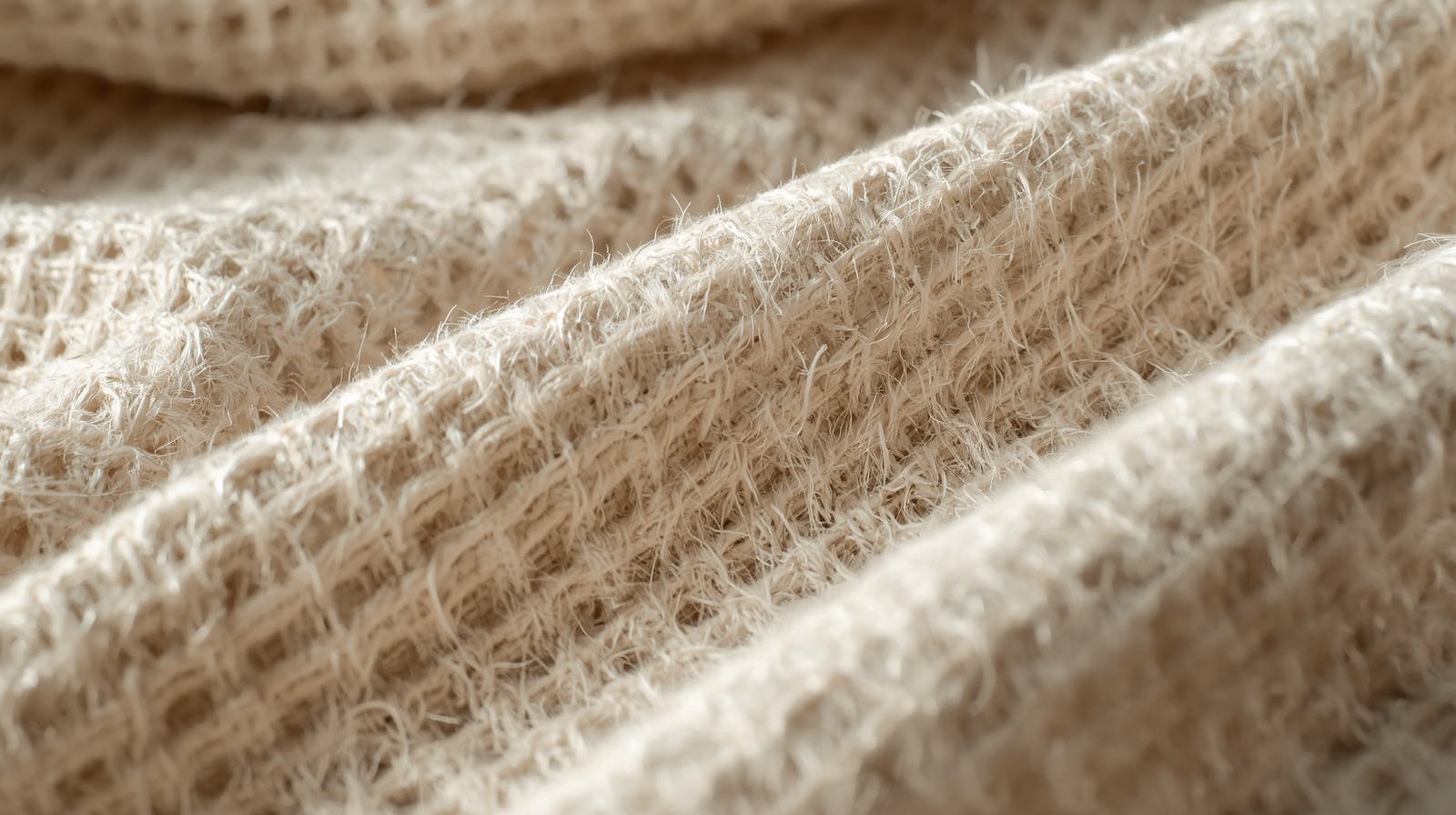
Why You Need a Coverlet in Your Home
Given the New Zealand climate, a coverlet is a "trans-seasonal" hero. Here is why every linen cupboard should have one:
The "Summer Switch"
In January and February, a duvet even a summer weight one can often feel too stifling. A linen coverlet is the perfect solution. It provides the "weight" and security we crave when sleeping, without the heat retention of a duvet. It is breathable, moisture-wicking, and light.
The Winter Layer
When July hits, your duvet might not be enough. Instead of cranking up the heater (and the power bill), throwing a textured coverlet over the foot of the bed adds a surprising amount of trapped heat.
The Pet Shield
If you have a dog or cat that sleeps on the bed, you know the struggle of muddy paws on your expensive duvet cover. A coverlet acts as a protective shield. It is much easier to toss a coverlet in the washing machine than it is to strip and remake a whole duvet set.
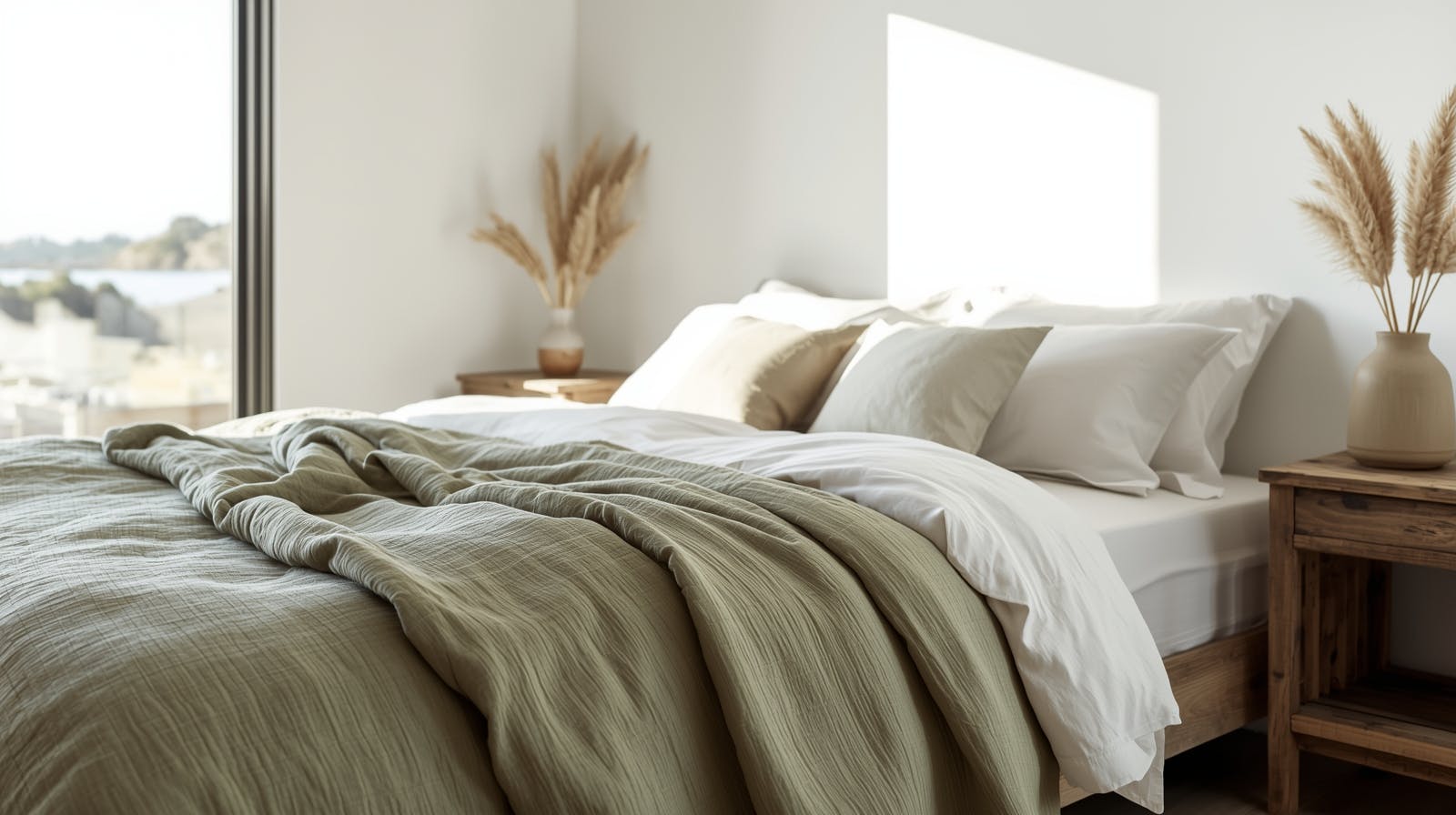
Materials Matter: Why We Love Linen
While you can find polyester or cotton synthetics, at George Street Linen, we champion natural fibres.
Why choose a Linen Coverlet?
- Thermoregulation: Linen is a hollow fibre. It cools you in summer and insulates you in winter.
- Durability: Linen is 30% stronger than cotton. A coverlet is an exposed layer (people sit on it, pets jump on it), so it needs to be tough.
The "Lived-in" Look: Linen coverlets have a beautiful, natural drape that doesn't need to look perfectly ironed. The wrinkles are part of the luxury.
Styling Guide: How to Dress Your Bed
There is no "wrong" way to use a coverlet, but here are the three most popular styling techniques used by interior designers:
The Hotel Fold (Decorative)
Fold the coverlet into thirds and place it across the foot of the bed.
- Why? It adds a pop of colour and texture without covering the whole duvet. It’s ready to be pulled up if you get cold at night.
The Military Tuck (Tailored)
Cover the entire bed with the coverlet, pulling it right up to the pillows. Tuck the edges tightly under the mattress on all three sides.
- Why? This creates a very modern, minimalist, and clean look. Great for platform beds.
The Relaxed Drape (Casual)
Lay the coverlet over the bed and let the corners drape naturally.
- Why? This shows off the linen's natural movement and creates a cozy, inviting "sanctuary" vibe.
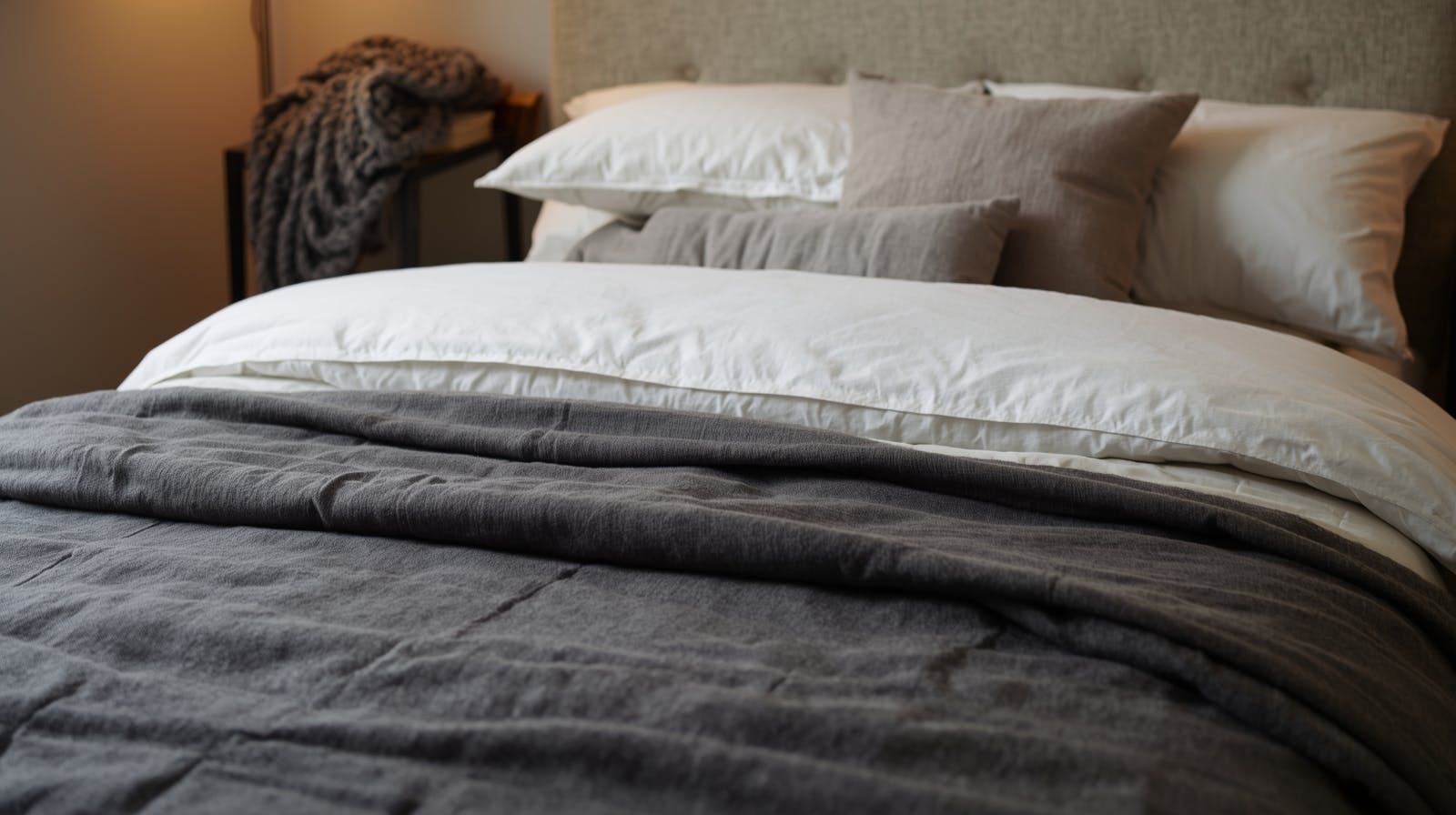
Sizing and Fit: Getting the Drop Right
A common mistake is buying a coverlet that is too small. Because a coverlet goes over your duvet (which adds bulk), you often need to size up.
- Standard Rule: A coverlet should hang (drop) at least 20cm to 40cm down the side of the bed to cover the mattress and the top of the base.
- Queen Bed: If you have a high Queen bed with a thick duvet, consider buying a King/Super King coverlet for a luxurious drape.
- Super King: Ensure you check the dimensions. You want enough width so that it doesn't look like a "topper."
Ready to upgrade your sleep?
Whether you are looking for a lightweight summer solution or a stylish winter layer, a coverlet is the missing piece in your bedding puzzle.
Experience the breathable luxury of Coverlets where style meets sustainability.
Frequently Asked Questions
Can I use an electric blanket with a coverlet?
Yes, absolutely. The electric blanket goes on the mattress (under the bottom sheet). The coverlet goes on top. In fact, a coverlet helps trap the heat from the electric blanket more efficiently than a sheet alone.
Do I put the coverlet over or under the duvet?
Traditionally, it goes over the duvet for styling during the day. However, some people prefer sleeping under the coverlet and having the duvet folded at the end of the bed for weight.
Are coverlets machine washable?
Generally, yes. This is their main advantage over heavy quilts. Always check the care label. For our linen coverlets, we recommend a cool gentle wash and line drying in the shade to prevent shrinkage and fading.
Is a coverlet warm enough for a NZ winter?
On its own? Likely not, unless you are a very hot sleeper. In winter, a coverlet is a companion to your duvet. In summer, it is a replacement for your duvet.