Duvet vs Comforter: Which Bedding Option Is Right for You in 2026?
Choosing between a duvet and a comforter sounds simple until it isn’t - because it’s not just about warmth, but how your bed feels at the end of a long day.How easy it is to live with. How often you actually want to climb into it and stay there a little longer.
At George Street Linen, we focus on duvet inners (also known as quilts or doonas). Not because they’re trendier but because, after years of working with fabrics, they offer a more considered way to get your bedding right.
They give you control over what touches your skin - from the inner to the cover you choose . They’re easier to care for and they adapt as your life does. To understand why, it helps to start with the basics.
What Is a Duvet?
A duvet is a simple system of two parts that work together.
- A duvet inner (the part that provides warmth)
- A duvet cover (the removable outer layer you see and wash)
It’s a small distinction. But it changes everything, Because when you separate the layers:
- You can wash the part that touches your skin, regularly
- You can change the look of your bed without replacing the whole thing
- You can choose materials that actually suit how you sleep
It’s less about adding complexity and more about building something that works properly over time.
What Is a Comforter?
A comforter takes the opposite approach. Everything is stitched into one piece:
- Outer fabric
- Filling
- Design
You buy it, place it on your bed, and it’s done. Simple, yes — but fixed.
The warmth stays the same. The feel doesn’t shift. And when it’s time to clean it, you’re handling the whole piece at once.
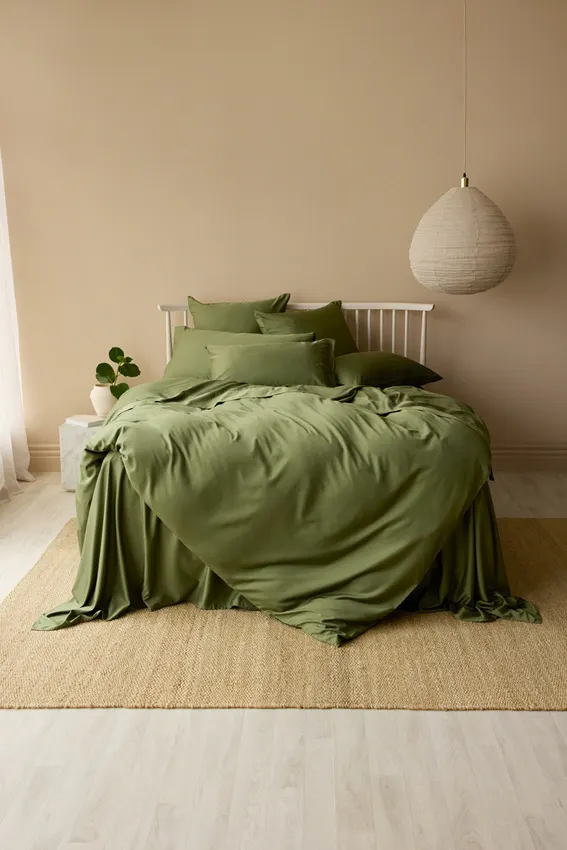
Duvet vs Comforter
To truly understand which option is right for you, let's compare them across the factors that matter most in everyday life.
Cleaning
When it comes to cleaning, the duvet has a clear and practical advantage. The removable duvet cover can be easily washed at home with your regular laundry, ensuring the part of your bedding that touches your body is always fresh and clean. The bulky insert, protected by the cover, only needs to be cleaned a couple of times a year. This makes maintaining hygiene simple and convenient.
A comforter, being a single unit, requires the entire piece to be washed. This is often impractical for standard home washing machines, necessitating a trip to the laundromat. As a result, comforters are washed far less frequently, which can be a concern for hygiene.
Style
A duvet gives you flexibility without excess. You don’t need a completely new bed to shift the mood.
A lighter linen duvet cover in summer . Something deeper, warmer in winter or a quiet change when your space starts to feel a little tired. You’re not replacing the whole piece, just the layer that holds the visual story.
A comforter stays as it is. Until you replace it entirely.
Comfort and Warmth
Warmth matters, but it’s not the whole story - how your bedding breathes matters just as much.
With a duvet, you can choose materials, like natural fibres that regulate temperature, allow airflow, and respond to your body rather than trapping heat.
- Wool adjusts naturally to temperature changes
- Cotton breathes and softens over time
- Linen allows airflow and keeps things light
A comforter offers a single level of warmth. Sometimes it feels right, sometimes it doesn’t, but it stays the same.
Practicality for Everyday Use
A duvet asks for a small amount of effort upfront putting the cover on. After that, it simplifies everything.
- Easier to clean
- Easier to adapt
- Easier to live with
A comforter feels simpler at the beginning, but over time, it tends to ask more of you.
Longevity and Durability
This is where the difference becomes long term. With a duvet:
- The cover takes daily wear
- The inner stays protected
- You replace parts, not the whole
A well made duvet inner can last for years.
A comforter is worn as one piece and when the fabric fades or the fill starts to clump, the entire thing needs replacing. It’s not just about durability, it's about not having to start again every few years.
So, Which One Should You Choose?
Your final decision should be based on what you value most. Here’s a quick guide to help you choose based on your personal preferences and habits.
If You Want a Bed That Feels Good
A duvet is the better choice.
It allows you to keep things clean, breathable, and consistent without overcomplicating your routine.
If You Like Things to Evolve Over Time
If you see your bedroom as a canvas for self expression, a duvet is the clear winner. The ability to switch out the white linen duvet cover for a dark, moody one offers endless creative freedom. A comforter locks you into one look, but a duvet lets your style evolve.
If You Care About What You’re Sleeping In
This is where duvets quietly stand apart. Because when the layers are separate, you can choose what matters:
- natural fibres
- breathable materials
- fabrics that feel better with time
Not everything stitched together, hidden inside one piece.
Frequently Asked Questions
Can you put a comforter inside a duvet cover?
You can, but it rarely works well.
The sizing is usually off. The weight becomes uneven. And it tends to bunch where you don’t want it to. A duvet cover is designed to work with a duvet inner. That pairing matters.
What’s the difference between a duvet, quilt, and doona?
In New Zealand and Australia, the terms are often used interchangeably.
- Duvet / quilt / doona → typically refers to the inner
- Duvet cover → the removable outer layer
Is a duvet better for warm climates?
Yes.
Because you can choose lighter, breathable materials and avoid trapping heat. A comforter locks you into one level of insulation which is often too much.